


Imagine walking down the grocery aisle and feeling a sense of relief when you see that bright “zero calories” label on your favorite soda. It feels like a nutritional superpower, allowing you to enjoy the sweetness you crave without the metabolic price tag of refined sugar. However, beneath that enticing promise of a guilt-free treat, a complex scientific debate is unfolding about how zero-calorie sweeteners actually interact with your internal chemistry. While they were once hailed as the ultimate tool for weight management, many people are now discovering that these modern inventions might be sending confusing signals to the body’s natural regulatory systems.
In the ancient tradition of Ayurveda, the taste of sweetness, or Madhura Rasa, is considered nourishing and grounding, yet it is always tied to the energy of the substance it comes from. When we introduce intense sweetness without any caloric energy, it creates a unique physiological puzzle for our digestion. This article explores the journey of these substances from the early days of synthetic chemistry to the modern re-evaluation of metabolic health. You will discover why the shift toward natural alternatives like Stevia offers a more balanced perspective on maintaining wellness in a world obsessed with being sugar-free.
The history of modern sugar substitutes began with the accidental discovery of saccharin in 1879, which paved the way for a multi-billion dollar industry of synthetic additives like aspartame and sucralose. While these compounds successfully mimic sweetness, modern research suggests they may carry hidden costs for your metabolic health. Frequent consumption of these synthetic zero-calorie sweeteners has been linked in various clinical observations to a disrupted gut microbiome, increased cravings, and even potential interference with insulin sensitivity. From an Ayurvedic viewpoint, these lab-created chemicals are often seen as difficult for the Agni, or digestive fire, to process because they lack a natural biological blueprint, potentially leading to the accumulation of toxins in the body over time.
What Is Stevia?
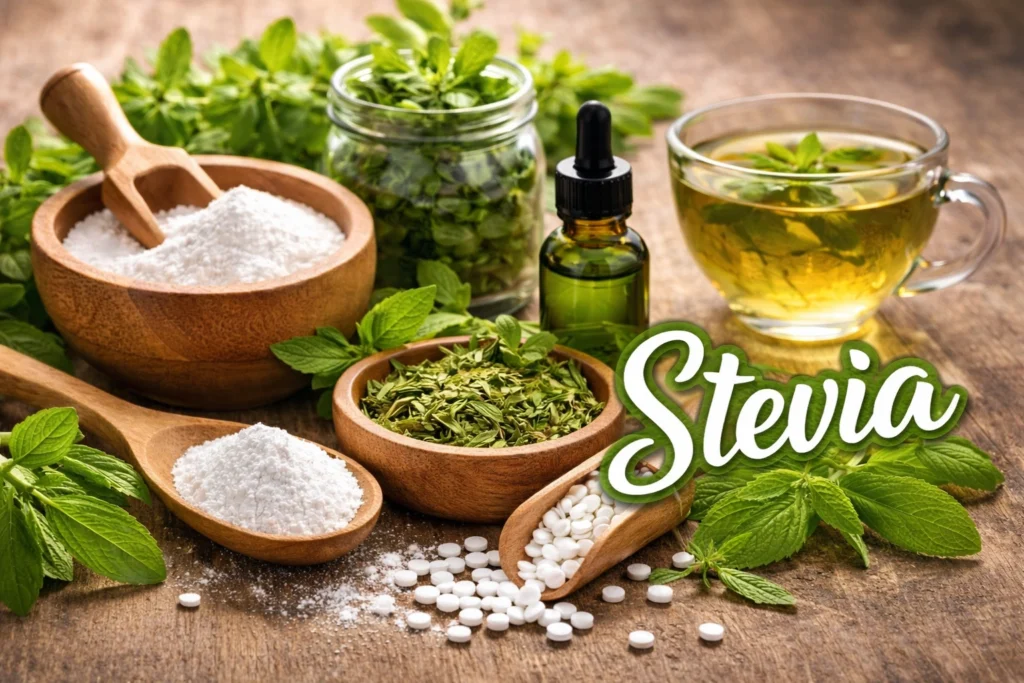
Stevia rebaudiana is a perennial shrub native to South America that has become the premier natural alternative to synthetic zero-calorie sweeteners. Botanically, the plant belongs to the Asteraceae family, and its leaves contain unique compounds called steviol glycosides that provide intense sweetness without any glucose. In Ayurvedic terms, although not native to ancient India, Stevia is often categorized by its cooling nature and its ability to satisfy the sweet tooth without aggravating Kapha, the bio-energy associated with earth and water.
Historically, indigenous communities used the raw leaves of this plant for centuries to sweeten medicinal teas and traditional beverages. Unlike the first generation of chemical sweeteners, this herb is a whole botanical entity. In modern wellness practices, it is celebrated for providing a bridge between the human desire for sweetness and the biological need for metabolic stability. Its significance in Ayurveda lies in its capacity to offer the “Madhura” (sweet) taste without the heavy, damp qualities typically associated with refined sugars or the chemical complexity of synthetic substitutes.
How Stevia Works in the Body
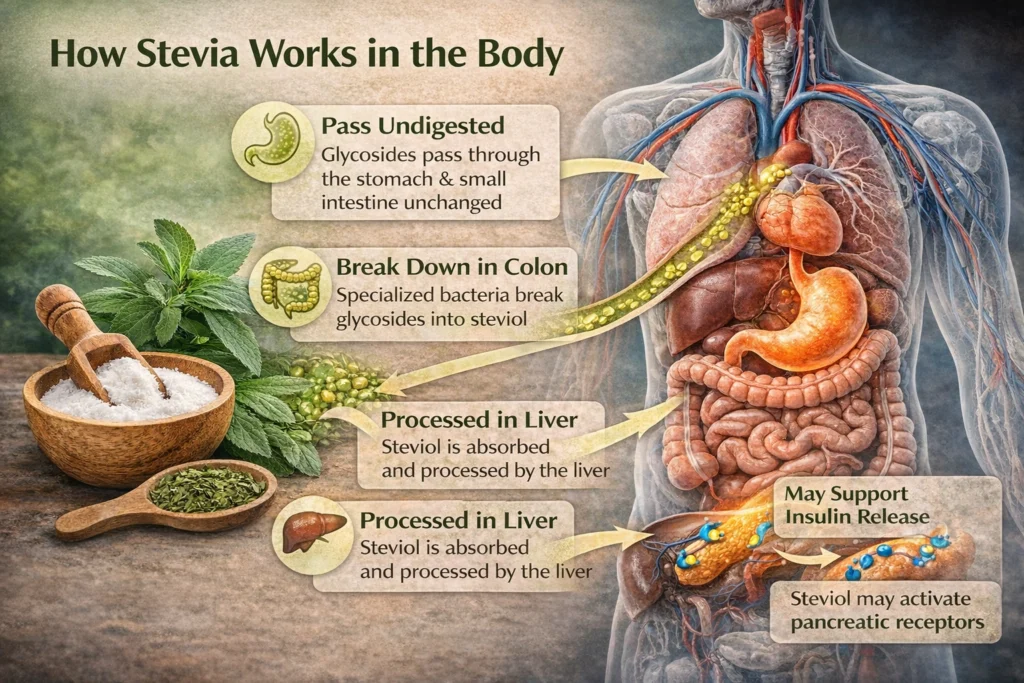
When you consume this herb, the sweet components pass through the upper gastrointestinal tract without being broken down, which is why they do not contribute calories or raise blood sugar. Once they reach the colon, specialized bacteria break down the glycosides into steviol, which is then absorbed and processed by the liver before being excreted. This unique pathway is a primary reason why researchers study its effects on the digestive system differently than they do with table sugar or synthetic alternatives.
In the Ayurvedic view, the way a substance interacts with our internal fire determines its health impact. Because the active compounds in this herb are derived from a leaf, they are seen as more compatible with the body’s natural detoxification pathways. Biologically, research has shown that these compounds can interact with specific receptors in the pancreas, potentially supporting the natural release of insulin. This physiological harmony is what sets botanical sweetness apart from the “metabolic confusion” often caused by early artificial inventions.
Health Benefits of Stevia
Supports Healthy Blood Sugar Levels
Clinical observations have indicated that using this plant-based sweetener does not cause the rapid spikes in blood glucose typically associated with sucrose. In a study published in the journal Metabolism, researchers noted that individuals who replaced sugar with these natural glycosides maintained more stable post-meal glucose levels. This suggests that the herb provides sensory satisfaction without the immediate glycemic burden on the system.
Assists in Weight Management Efforts
For those navigating the challenges of calorie density, replacing high-calorie sugars with this herb can be a helpful strategy. A study in the journal Appetite found that participants who consumed this natural sweetener before a meal did not compensate by eating more later in the day. This indicates that it may help reduce total daily caloric intake while keeping the appetite regulated and satisfied.
Promotes Dental Health
Unlike traditional sugar, which provides a feast for the bacteria that cause cavities, the compounds in this plant do not ferment in the oral cavity. Research documented in the Journal of Contemporary Dental Practice suggests that it is non-cariogenic, meaning it does not contribute to the formation of plaque or tooth decay. This makes it a frequent choice for those looking to protect their enamel while enjoying sweet flavors.
Offers Antioxidant Properties
The leaves of this botanical contain various phenolic compounds and flavonoids that contribute to its overall biological activity. According to a study in the Journal of Dietary Supplements, these compounds help neutralize free radicals within the body. This provides a layer of cellular protection that is completely absent in synthetic, laboratory-made zero-calorie sweeteners.
Maintains Blood Pressure Within Normal Ranges
Some research has explored the relationship between specific compounds in this herb and cardiovascular wellness. A long-term clinical trial published in Clinical Therapeutics observed that high doses of stevioside were associated with a slight reduction in systolic and diastolic blood pressure over time. This suggests a potential vasodilatory effect that benefits the circulatory system when used as part of a balanced diet.
Nurtures a Balanced Kapha Dosha
From an Ayurvedic perspective, excess sugar is a primary cause of Kapha imbalance, often leading to feelings of lethargy or physical heaviness. Because this herb provides sweetness without the heavy, damp qualities of sugar, it is viewed in traditional contexts as a way to satisfy cravings without increasing the “earthy” elements. This allows for a more balanced approach to weight and energy levels.
Scientific Research and Evidence
The metabolic impact of sugar substitutes has been a focal point for some of the world’s leading researchers. Dr. Jotham Suez, a researcher at the Weizmann Institute of Science, led a landmark study published in the journal Nature in 2014, which concluded that zero-calorie sweeteners can alter the functional repertoire of the gut microbiota. Dr. Suez and his team found that these alterations could lead to glucose intolerance in both animal models and human subjects, suggesting that the sugar-free label might not be as metabolic-neutral as previously believed. Nature Study — Jotham Suez, 2014. Nature.
Source: https://www.nature.com/articles/nature13793
In another significant study published in the journal Cell in 2022, Dr. Eran Elinav, a professor at the Weizmann Institute and the German Cancer Research Center, further explored this phenomenon. Dr. Elinav noted that individual responses to sweeteners like saccharin and sucralose are highly personalized, appearing to depend on the unique composition of a person’s existing gut microbiome. According to Dr. Elinav, the findings indicate that these sweeteners are not inert and can indeed affect human physiology in ways that vary significantly from person to person. Cell Study — Eran Elinav, 2022. Cell.
Source:https://www.cell.com/cell/fulltext/S0092-8674(22)00919-9
Furthermore, research led by Dr. Susan Swithers at Purdue University has highlighted the behavioral side of the equation. Dr. Swithers, a professor of psychological sciences, published a review in Trends in Endocrinology & Metabolism stating that frequent consumption of high-intensity sweeteners may interfere with the body’s learned relationship between sweet tastes and caloric delivery. This interference, as noted by Dr. Swithers, could potentially lead to overeating and a reduced thermic effect of food, ultimately complicating weight loss efforts. Trends in Endocrinology Review — Susan Swithers, 2013. Trends in Endocrinology & Metabolism.
Source:https://pubmed.ncbi.nlm.nih.gov/23850261/
Where to Find Stevia
Finding high-quality forms of this herb has become significantly easier as global interest in natural wellness grows. You can typically find it in local health food stores, organic sections of major supermarkets, and specialized Ayurvedic apothecaries. When looking for the best options, it is helpful to search for “whole-leaf” or “green leaf” versions, which are the least processed forms and retain more of the plant’s natural profile compared to highly refined white powders.
Online platforms like Amazon, iHerb, and Thrive Market offer a wide variety of forms, including liquid drops, dried leaves, and concentrated extracts. It is wise to look for products that are certified organic and free from “bulking agents” like maltodextrin, which are often added to make the sweetener measure like real sugar. Reading the labels carefully ensures that you are getting the pure botanical experience intended by nature without unnecessary additives.
How to Consume Stevia
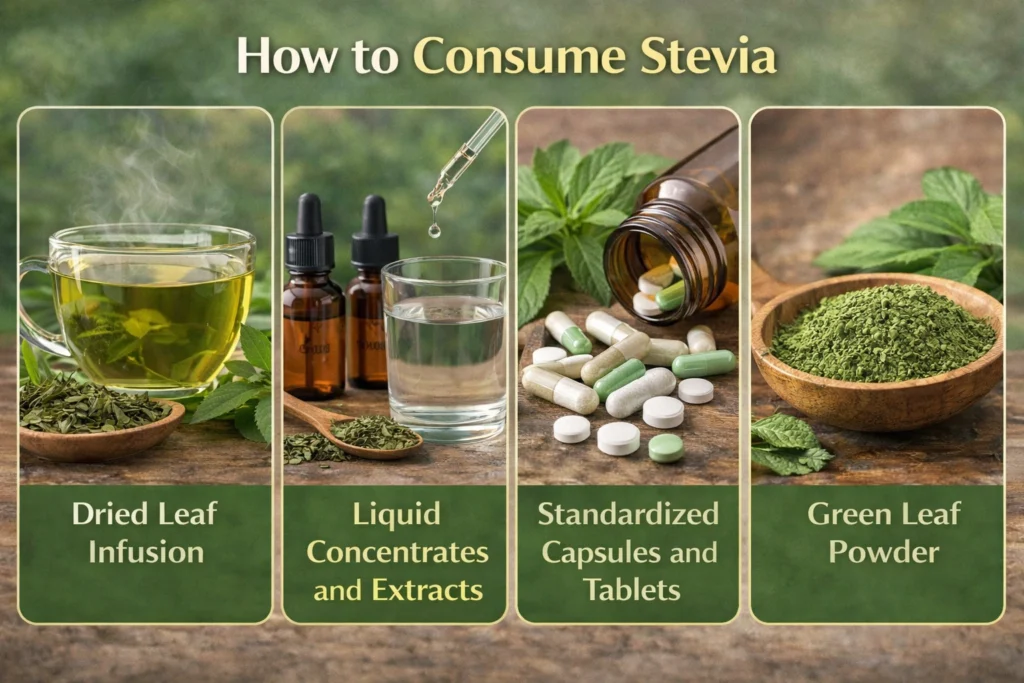
Dried Leaf Infusion
Traditionally, the leaves of the plant were dried and added directly to herbal teas to mask bitter flavors. In research settings, such as those documented in the Journal of Ethnopharmacology, this method allows the water-soluble glycosides to be released naturally into the liquid. This provides a subtle, herbal sweetness that complements traditional tea blends.
Liquid Concentrates and Extracts
Liquid versions of this herb are often created by extracting the sweet components using water or food-grade alcohol. This form is frequently used in clinical studies because it allows for very precise dosing of the active compounds. In these settings, a few drops are added to beverages to observe the physiological response without adding bulk to the diet.
Standardized Capsules and Tablets
For those who prefer a measured approach to their herbal intake, this botanical is available in capsule form. Research published in the British Journal of Nutrition has utilized standardized capsules to study the long-term effects of steviosides on cardiovascular markers. This method ensures a consistent intake of active glycosides throughout the duration of a study.
Green Leaf Powder
The entire leaf can be ground into a fine green powder, preserving the chlorophyll and fibers of the plant alongside its sweetness. Traditional Ayurvedic practitioners often prefer this whole-herb approach as it aligns with the principle of using the plant in its most complete form to maintain biological synergy and natural balance.
Safety and Side Effects
While this plant-based sweetener is generally recognized as safe, it is important to be aware of how your body responds. Some individuals report a slight bitter aftertaste or mild digestive sensations when they first introduce it into their routine. From a traditional perspective, the extreme sweetness can sometimes overstimulate the senses, so it is often suggested to use it in moderation to avoid overwhelming the palate.
Specific populations should exercise extra caution when choosing any zero-calorie sweeteners. For instance, people with low blood pressure or those taking medication for diabetes should be mindful, as the herb’s natural ability to support lower glucose and pressure levels might compound the effects of their medication. Additionally, pregnant or breastfeeding women are often advised in clinical literature to stick to the most natural, least processed forms of the herb to ensure purity.
FAQ
Does this herb affect insulin levels?
Studies have shown that Stevia does not cause an insulin spike like sugar does. In fact, some clinical research indicates it may actually support the pancreas in functioning more efficiently, making it a subject of interest for those monitoring their metabolic health.
Can I use the green leaves from my garden?
Yes, using the fresh or dried green leaves is the most traditional way to consume this herb. This whole-leaf form contains all the plant’s natural compounds, whereas the white powders found in stores are usually highly refined extracts of just one or two sweet glycosides.
Will it help me lose weight?
While replacing sugar with zero-calorie sweeteners reduces your calorie intake, weight loss depends on your overall lifestyle. Research suggests that using natural substitutes can be a helpful tool for weight management, provided it doesn’t lead to eating more calories from other sources later in the day.
Is it safe for children?
Most health organizations consider the purified extracts of this plant to be safe for children in moderation. However, many practitioners suggest focusing on whole food sources of sweetness for developing bodies and using herbal substitutes as an occasional alternative rather than a dietary staple.
Conclusion
Navigating the world of zero-calorie sweeteners requires a careful balance between modern convenience and the wisdom of traditional health practices. While the history of sugar substitutes began with synthetic chemicals that we now know can disrupt our internal balance, the shift toward natural options like Stevia offers a more harmonious path. Science continues to show that our bodies respond best to substances that exist in nature, rather than those created in a laboratory.
By choosing a plant-based approach to sweetness, you are aligning yourself with the Ayurvedic principle of respecting the body’s complex digestive fire. Whether you are looking to support your blood sugar or simply reduce your intake of refined additives, the evidence suggests that botanical sweetness is a valuable ally. It honors the “Madhura” taste while protecting the metabolic integrity that is so vital for long-term wellness.
Ultimately, your journey toward health is a personal one that deserves professional guidance. While the evidence-based benefits of this herb are promising, they are most effective when part of a holistic lifestyle and a balanced diet. It is strongly encouraged that you consult with a qualified healthcare provider or an Ayurvedic practitioner before making significant changes to your routine or introducing new herbal extracts into your daily life.
Related Post: 7 Proven Benefits of Sugar Destroyer That Will Transform Your Health
