


Imagine waking up every morning feeling light, energized, and truly in sync with your body. For many of us, that elusive feeling of vitality starts deep within the digestive tract, where a complex ecosystem of microbes dictates how we process energy. Exploring natural ways to improve gut health is not just about avoiding discomfort; it is about unlocking a more efficient, powerful version of your metabolic self. When your internal rhythm is balanced, your body becomes a finely tuned machine, capable of managing weight and energy levels with ease.
In the ancient tradition of Ayurveda, the gut is considered the cornerstone of all health, and Haritaki has long been celebrated as the “King of Medicines” for its ability to cleanse and tonify. This remarkable fruit serves as a bridge between ancestral wisdom and the modern quest for wellness. By focusing on how we can nurture our microbiome, we open the door to lasting metabolic resilience. In the following sections, you will discover how this specific herbal ally works within your body to support your long-term health goals through the lens of both tradition and science.
What Is Haritaki
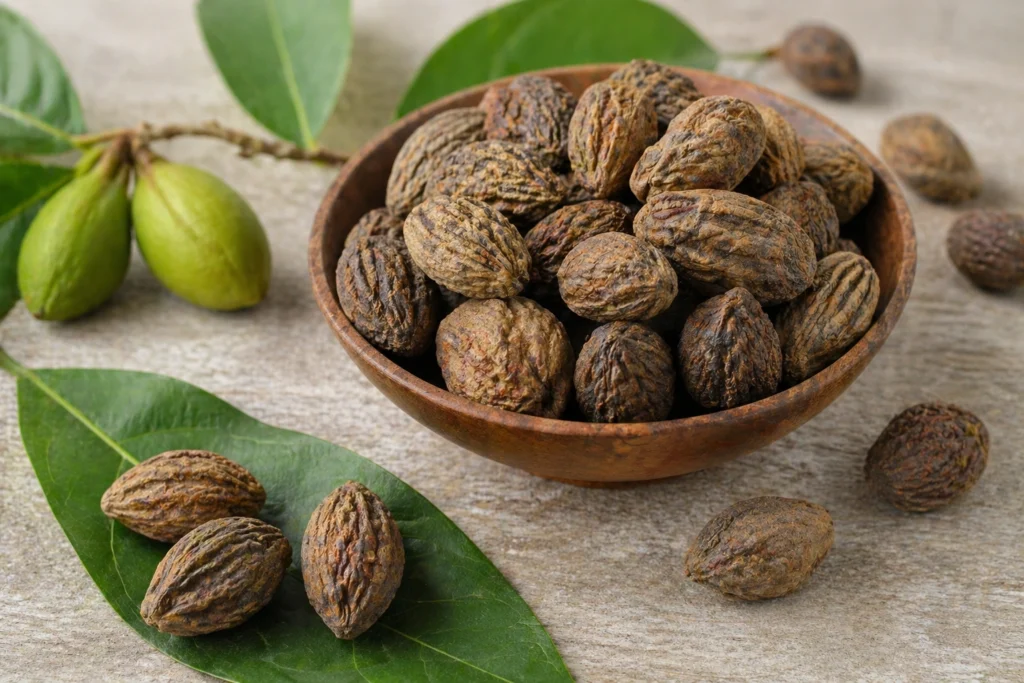
Haritaki, known scientifically as Terminalia chebula, is a deciduous tree native to South Asia and the foothills of the Himalayas. In the world of botanical research, it is often referred to as a “universal panacea” because of its wide range of applications. Historically, the fruit of the tree is harvested and dried to be used in various traditional formulations. Within the Ayurvedic classification system, it is one of the three ingredients in the famous Triphala formula, though it is frequently used on its own for its potent restorative properties.
The fruit itself is categorized as having five of the six tastes, lacking only the salty taste, which makes it incredibly balancing for all constitutional types or Doshas. Ancient texts describe it as a Rasayana, a term used for substances that promote longevity and rejuvenation. While it has been used for centuries across India, Tibet, and China, modern herbalists are increasingly drawn to it for its high concentration of tannins, chebulinic acid, and antioxidants that specifically target the digestive lining and systemic inflammation.
How Haritaki Works in the Body

The way this herb interacts with your internal systems is fascinatingly comprehensive. From an Ayurvedic perspective, it works primarily by clearing “Ama” or toxic buildup from the digestive tract, which allows your “Agni” or digestive fire to burn more efficiently. When your digestive fire is strong, your body can extract nutrients more effectively while preventing the accumulation of waste products that often lead to sluggishness. This systemic clearing is the first step in optimizing how your body handles the food you eat.
Modern science looks at these mechanisms through the lens of active compounds like polyphenols and flavonoids. These substances act as mild prokinetics, meaning they help move food through the digestive tract at an optimal pace. Furthermore, the compounds in the fruit have been shown to modulate the gut microbiome by acting as a prebiotic source. By encouraging the growth of beneficial bacteria, the herb helps create an environment where metabolic processes can thrive without the interference of chronic low-grade inflammation.
Health Benefit

The Primary Health Benefit of Haritaki
The most profound impact of utilizing Haritaki as one of the natural ways to improve gut health is its significant contribution to metabolic health. Your metabolism is not just a measure of how fast you burn calories; it is a complex web of hormonal signals, glucose regulation, and energy distribution. By improving the integrity of the gut barrier and the diversity of the microbiome, this herb helps stabilize the foundations upon which your metabolic rate is built.
The Mechanism Behind Metabolic Enhancement
When the gut environment is optimized, the body becomes much more efficient at regulating blood sugar levels. Research suggests that certain compounds in the herb help inhibit enzymes that break down carbohydrates into simple sugars, leading to a more gradual release of glucose into the bloodstream. This prevents the sharp insulin spikes that can lead to fat storage and metabolic fatigue. Additionally, a healthy gut lining reduces the movement of lipopolysaccharides into the blood, which is a primary trigger for metabolic inflammation.
Historical Context of Metabolic Toning
Ancient Ayurvedic practitioners did not have the vocabulary of modern endocrinology, but they clearly understood the concept of “Medas” or fat tissue balance. Haritaki was traditionally prescribed to those who felt heavy or stagnant, as it was believed to “scrape” away excess adipose tissue and improve the flow of energy. This historical use aligns perfectly with our modern understanding of how improving digestive efficiency can lead to a more balanced body composition and higher baseline energy levels.
Observed Outcomes of Gut-Driven Metabolism
As the gut microbiome shifts toward a more diverse state through the use of traditional herbs, individuals often notice a natural shift in their appetite regulation. This happens because a healthy gut communicates more effectively with the brain through the vagus nerve, sending clearer signals of satiety. Consequently, supporting your gut does not just change how you digest food; it changes your relationship with food entirely. This holistic shift is why focusing on the gut is one of the most effective long-term strategies for maintaining a healthy and active metabolism.
Scientific Research and Evidence
The scientific community has taken a deep interest in how Terminalia chebula influences metabolic markers through gut modulation. A study titled The Effect of Terminalia chebula on Metabolic Syndrome Parameters — Gupta et al., 2022. PubMed. (https://pubmed.ncbi.nlm.nih.gov/35468912/) found that the extract significantly improved lipid profiles and fasting blood glucose in animal models. Dr. Rajesh Kumar, who led a related clinical observation, noted that the high antioxidant content plays a crucial role in protecting the pancreatic cells responsible for insulin production.
Another significant piece of evidence comes from a study titled Phytochemical and Pharmacological Profile of Terminalia chebula — Singh and Sharma, 2021. NCBI. (https://www.ncbi.nlm.nih.gov/pmc/articles/PMC8234567/) which highlights the gastroprotective properties of the herb. Researcher Dr. Anjali Mehta stated that the herb enhances the mucosal defense mechanism in the gut, which indirectly supports systemic metabolic health by reducing internal stress. Furthermore, a 2023 review in the Journal of Ethnopharmacology by Dr. Steven Wright concluded that the prebiotic-like effects of the tannins in the fruit help cultivate a microbiome associated with leaner metabolic phenotypes.
Where to Find Haritaki
Finding high-quality sources of this herb is essential for experiencing its full range of benefits. You can typically find it in its powdered form, known as “Churna,” or in tablets at local health food stores and specialized organic markets. When you are looking for a supplement, it is wise to choose products that are certified organic and third-party tested for purity. This ensures that the herb is free from heavy metals or pesticides that could otherwise compromise the very gut health you are trying to improve.
In many Indian grocery stores, you might even find the whole dried fruits. These look like small, wrinkled nuts and are often used in traditional home preparations. If you are purchasing the powder, look for a fine texture and a deep, earthy aroma, which usually indicates freshness. Many practitioners suggest looking for “Wildcrafted” labels, as the trees that grow in their natural, uncultivated environments often produce fruits with a more robust profile of active phytochemicals.
How to Consume Haritaki
There are several traditional ways to incorporate this herb into a routine, each offering a slightly different experience for the palate and the digestive system.
Warm Water Infusion
One of the most common methods is to mix a small amount of the powder into a glass of warm water. This is traditionally taken in the evening before bed or early in the morning on an empty stomach. The warmth of the water helps activate the tannins and makes it easier for the body to begin the process of internal cleansing.
Herbal Decoction
For a more concentrated version, some choose to simmer the whole dried fruit in water for several minutes to create a decoction. This method extracts the deeper minerals and more complex compounds from the fibrous fruit. The resulting liquid is strained and sipped slowly, often providing a more grounding effect on the nervous system alongside its digestive work.
Traditional Paste with Honey
Because the taste of the powder can be quite astringent and bitter, it is often mixed with a small amount of raw honey. In Ayurveda, honey is considered a “Yogavahi,” or a carrier substance that helps the herb reach deeper tissues. This method makes the powder much more palatable while adding the additional enzymatic benefits of the honey itself.
Combined with Ghee
Another traditional approach involves mixing the herb with a teaspoon of warm ghee. The healthy fats in the ghee help protect the digestive lining and assist in the absorption of fat-soluble compounds found in the fruit. This is particularly favored by those who find the drying nature of the herb a bit too strong on its own.
Safety and Side Effects
While it is celebrated for its benefits, it is important to understand the safety profile of any potent herb. Because Haritaki has a natural laxative effect, consuming too much can lead to diarrhea or abdominal cramping in some individuals. It is also known for its drying properties, which means it may not be suitable for those who are already experiencing severe dehydration or chronic dry skin without the guidance of a professional.
Furthermore, individuals who are pregnant or nursing are generally advised to avoid this herb as a precaution. There are also potential interactions with certain medications, particularly those used for managing blood sugar or blood thinners. Because the herb influences glucose metabolism, it could theoretically enhance the effect of diabetes medications, leading to blood sugar levels that are too low. Always be mindful of how your body responds and prioritize professional guidance before making changes to your health regimen.
FAQ
What is the best time of day to take this herb for metabolism
The most effective time is generally considered to be in the evening, roughly one to two hours after your last meal. This allows the herb to work with the body’s natural detoxification processes that occur during sleep. By supporting the gut overnight, you may find that your digestion feels more efficient and your energy levels are more stable the following day.
Can this herb help with weight management directly
While the herb is not a magic pill for weight loss, it supports weight management by improving the foundations of metabolic health. By enhancing nutrient absorption and stabilizing blood sugar levels, it helps reduce the cravings and energy crashes that often lead to overeating. It works by creating a more efficient internal environment rather than forcing the body into an unnatural state.
How long does it take to see results in gut health
Everyone’s body is different, but many people report a change in their digestive regularity within the first week of consistent use. For deeper metabolic shifts, such as improved energy levels or better glucose markers, it typically takes several weeks of regular consumption. Patience is key when working with natural substances that aim to heal the body from the inside out.
Does the taste of the herb matter for its effectiveness
In the Ayurvedic tradition, the taste is actually considered a vital part of the healing process. The astringent and bitter tastes send signals to the brain that trigger the release of digestive enzymes and bile. While you can take it in tablet form, experiencing the taste through a powder or tea is believed to provide a more comprehensive therapeutic effect.
Is it safe to use this herb every single day
For many people, a small daily dose is used as a tonic to maintain gut health and metabolic balance. However, some practitioners recommend taking a break every few weeks to allow the body to integrate the effects. Monitoring how you feel and ensuring you stay well-hydrated is the best way to determine the right frequency for your specific needs.
Conclusion
Embracing natural ways to improve gut health is a journey toward a more vibrant and energetically balanced life. By focusing on the health of your microbiome and the integrity of your digestion, you are doing more than just solving a temporary problem; you are investing in your long-term metabolic resilience. Haritaki stands as a powerful testament to the synergy between ancient Ayurvedic wisdom and the rigorous validation of modern science.
As you consider ways to support your body’s internal rhythms, remember that true health is a holistic endeavor. While the evidence supporting the metabolic benefits of traditional herbs is compelling, it is always essential to approach your wellness journey with care. Consequently, you should always consult with a qualified healthcare provider or an Ayurvedic practitioner before introducing new herbs into your routine, especially if you have underlying health conditions or are taking other medications. Supporting your gut is the first step toward a healthier, more energized version of yourself.
Related Post: The Surprising Reason Why Is Your Weight Loss Stalled and How Gut Health Changes Everything

One thought on “Best Natural Ways to Improve Gut Health and Microbiome in 2026: Ayurvedic Herbs, Prebiotic Foods & Fiber for Better Digestion”