

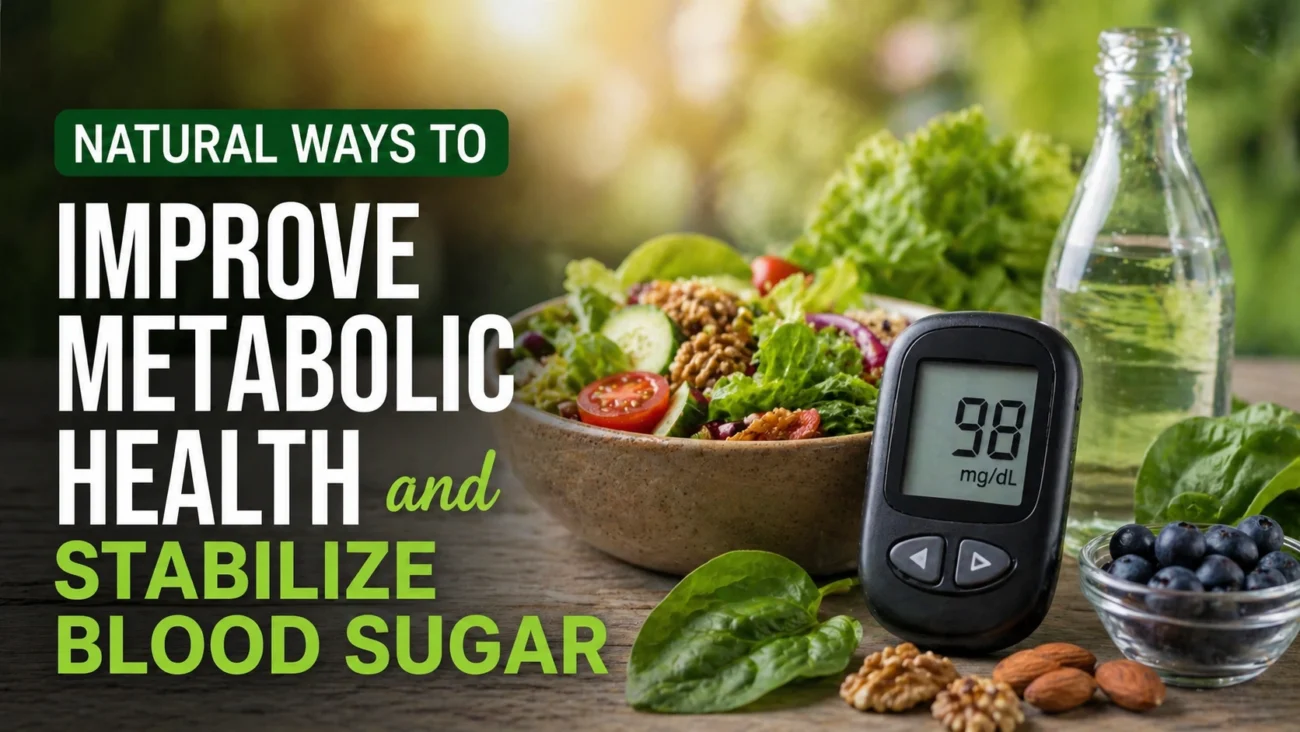
Imagine feeling a consistent, steady stream of energy from the moment you wake up until your head hits the pillow at night. For many, this feels like an impossible dream because they are stuck on a blood sugar roller coaster that leaves them exhausted and frustrated. Finding natural ways to improve metabolic health is not just about a number on a scale or a lab report. It is about reclaiming your vitality and ensuring your body functions as the high-performance machine it was meant to be.
Berberine has emerged as a cornerstone of this journey toward internal balance. In the ancient wisdom of Ayurveda, maintaining a strong metabolic fire is considered the foundation of all wellness. This golden-hued compound, found in several traditional plants, offers a bridge between those centuries-old traditions and the rigorous demands of modern clinical science. You are about to discover how this powerful botanical can help you achieve metabolic stability without relying solely on synthetic interventions.
By understanding the synergy between your lifestyle and nature’s pharmacy, you empower yourself to make informed choices. This article explores the depth of Berberine’s impact on your internal systems. We will look closely at the research and traditional applications that make it one of the most respected natural tools available today.
What Is Berberine?
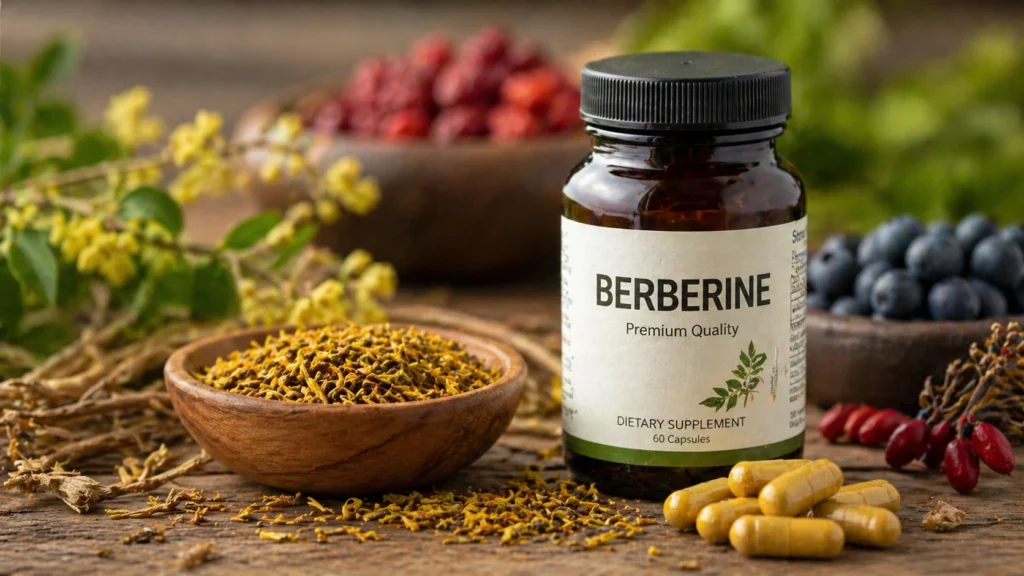
Berberine is a bioactive alkaloid that can be extracted from several different plants belonging to the Berberis genus. One of the most common sources is the Indian Barberry, known in Ayurvedic medicine as Daruharidra. This plant has been a staple in traditional healing for over three thousand years. Botanically, it is recognized for its vibrant yellow color, which is a visual indicator of the potent alkaloids contained within its roots and bark.
In the language of Ayurveda, Berberine-containing plants are often classified as having a bitter and astringent taste. These qualities are traditionally used to clear excess heat and balance the body’s internal systems. While modern science focuses on the molecular structure of the alkaloid, Ayurveda views it as a tool to cleanse the blood and support the liver. This dual perspective provides a comprehensive understanding of why this compound is so highly regarded.
History tells us that Berberine was not only used in India but also held a prominent place in traditional Chinese medicine. It was frequently utilized to address issues related to digestion and internal inflammation. Today, its reputation has evolved from a general tonic to a specific, science-backed powerhouse for those seeking natural ways to improve metabolic health.
How Berberine Works in the Body
The way Berberine interacts with your cellular biology is nothing short of fascinating. Once you consume it, the compound travels through your bloodstream and enters your cells. Its primary action is the activation of an enzyme called AMP-activated protein kinase. This enzyme is often referred to as a metabolic master switch. It plays a crucial role in regulating how your body produces and uses energy at a foundational level.
When this metabolic switch is flipped, it encourages your cells to take in more glucose from the blood. This process helps your body use sugar more efficiently for energy rather than letting it linger in the bloodstream where it can cause damage. Furthermore, Berberine influences the way your liver produces glucose. By slowing down this internal production, it provides a two-pronged approach to maintaining balance throughout the day.
At a mitochondrial level, Berberine supports the efficiency of your cell’s power plants. Consequently, your body becomes more adept at burning fats and carbohydrates. This systemic improvement in energy processing is exactly why it is considered one of the most effective natural ways to improve metabolic health. It does not just mask symptoms but works on the underlying cellular mechanisms that govern your overall well-being.
Health Benefit of Berberine
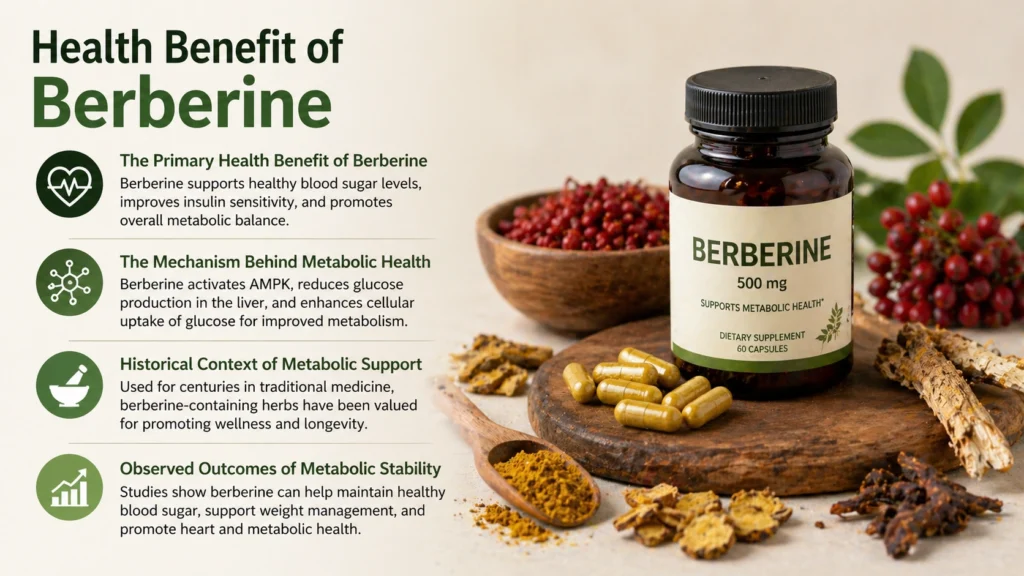
The Primary Health Benefit of Berberine
The most significant and well-documented advantage of using Berberine is its profound ability to support and optimize your metabolic health. When we talk about metabolic health, we are referring to how well your body processes nutrients and manages energy. Berberine acts as a powerful facilitator in this complex process, ensuring that your hormones and enzymes work in harmony to prevent the metabolic sluggishness that so many people face today.
The Mechanism Behind Metabolic Health
The primary mechanism by which Berberine enhances your metabolic profile is through the improvement of insulin sensitivity. Insulin is the hormone responsible for knocking on the doors of your cells to let sugar in. In many individuals, the cells stop answering that knock, a condition known as insulin resistance. Berberine essentially makes the cells more responsive to insulin again. As a result, your body does not need to produce as much of the hormone to get the job done, which reduces the strain on your pancreas.
Another fascinating aspect of its metabolic impact is its influence on the gut microbiome. Recent studies suggest that Berberine can alter the composition of bacteria in your digestive tract. These changes can lead to a decrease in the production of compounds that cause systemic inflammation. Since chronic inflammation is a major contributor to metabolic dysfunction, this gut-level action provides a unique pathway to health that many other supplements simply do not address.
Historical Context of Metabolic Support
Historically, Ayurveda used Daruharidra to treat what was known as Prameha, a term that encompasses various metabolic and urinary disorders. The ancient practitioners understood that certain bitter herbs could scrape away excess fat and toxins from the tissues. This traditional concept of scraping or Lekhana aligns remarkably well with the modern understanding of how Berberine clears lipids and excess glucose from the system. It is a beautiful example of how ancient observation meets modern verification.
Observed Outcomes of Metabolic Stability
When metabolic health is stabilized through these natural pathways, the outcomes are often visible and felt throughout the entire body. Many individuals notice a reduction in the intense cravings for sugar and carbohydrates that often drive metabolic issues. This happens because blood sugar levels are no longer spiking and crashing violently. Instead, the body maintains a more level state, which leads to better mood stability and improved focus during the day.
Additionally, the optimization of metabolic health often leads to better weight management outcomes. When your body is efficient at processing glucose and sensitive to insulin, it is less likely to store excess energy as visceral fat. While Berberine is not a weight loss drug, its role in fixing the underlying metabolic machinery makes it a vital ally for anyone looking to achieve a healthier body composition naturally. This comprehensive support system is why Berberine is at the top of the list of natural ways to improve metabolic health.
Scientific Research and Evidence
The scientific community has taken a deep interest in Berberine, leading to several high-quality clinical trials that validate its traditional uses. One landmark study titled “Efficacy of Berberine in Patients with Type 2 Diabetes” showed that Berberine produced significant reductions in blood glucose levels. The researchers noted that its effects were comparable to some commonly prescribed metabolic medications. This study was authored by Yin, J., Xing, H., and Ye, J. in 2008 and published in Metabolism.
Source: (https://pubmed.ncbi.nlm.nih.gov/18442638/)
Another important piece of research focused on the lipid-lowering effects of the compound. In a study titled “Berberine is a novel cholesterol-lowering drug working through a unique mechanism distinct from statins,” published in Nature Medicine, authors Kong, W. et al. in 2004 demonstrated how Berberine increases the expression of LDL receptors in the liver. Dr. Wei Kong, the lead researcher, stated that Berberine represents a new class of lipid-lowering compounds that work through the stabilization of mRNA.
Source:(https://www.nature.com/articles/nm1135)
Furthermore, research published in the Journal of Clinical Endocrinology and Metabolism explored its effects on polycystic ovary syndrome, a condition closely tied to metabolic health. The study, “A Clinical Study on the Effects of Berberine on Metabolic and Endocrine Features,” by Wei, W. et al. in 2012, found significant improvements in insulin sensitivity among participants. Dr. Wenying Yang, a collaborator on the study, emphasized that Berberine’s multi-target approach makes it uniquely effective for complex metabolic challenges.
Source:(https://academic.oup.com/jcem/article/97/1/142/2833113)
In a meta-analysis titled “Berberine in the Treatment of Type 2 Diabetes Mellitus: A Systemic Review and Meta-Analysis,” published in Evidence-Based Complementary and Alternative Medicine, Lan, J. et al. in 2015 reviewed 27 randomized controlled trials. The researchers concluded that Berberine combined with lifestyle changes was more effective at improving metabolic markers than lifestyle changes alone. Dr. Jiaqi Lan noted in the findings that the safety profile of the herb remained high across the various studied groups.
Source:(https://www.ncbi.nlm.nih.gov/pmc/articles/PMC4350248/)
Where to Find Berberine
Finding high-quality Berberine is essential for ensuring you receive the metabolic benefits discussed. It is most commonly found in specialized health food stores, reputable organic markets, and through online retailers that focus on botanical supplements. Because Berberine is a concentrated alkaloid, it is usually sold in capsule or tablet form rather than as a whole herb. You may also find it as a component of Ayurvedic formulas labeled as Daruharidra or Tree Turmeric.
When you are looking to source this herb, it is vital to pay attention to the purity and concentration of the extract. Look for products that specify the percentage of Berberine HCl on the label, as this is the form most used in clinical research. Choosing a brand that utilizes third-party testing can provide an extra layer of assurance that the product is free from contaminants like heavy metals or synthetic fillers.
Buying from local Ayurvedic practitioners or specialized dispensaries can also be a great way to ensure quality. These sources often have a deeper understanding of the plant’s origin and the methods used to extract the alkaloids. Always check for a vibrant yellow color if you are looking at powders or open capsules, as this is a hallmark of high-quality Berberine content. Taking the time to find a clean source is a key step in exploring natural ways to improve metabolic health.
How to Consume Berberine
Standard Encapsulated Extracts
The most frequent way Berberine is utilized in clinical settings is through standardized encapsulated extracts. These capsules usually contain a specific dosage, such as 500 milligrams, which allows for precise monitoring of intake during research. This method is preferred by many because the intense bitterness of the alkaloid is bypassed. In various studies, these capsules are typically taken shortly before or with a meal to maximize their effect on post-meal glucose levels.
Traditional Ayurvedic Decoction
In the traditional practice of Ayurveda, Berberine-rich herbs like Daruharidra are often prepared as a decoction. This involves boiling the coarse powder of the root or bark in water until the liquid is reduced to a fraction of its original volume. The resulting concentrated tea is quite bitter and is traditionally consumed in small amounts. This method is believed to allow the herb to start working as soon as it touches the tongue, stimulating digestive enzymes.
Concentrated Herbal Tablets or Ghan Vati
Another traditional method involves creating concentrated tablets known as Ghan Vati. This process involves evaporating the water from a decoction until a thick paste is formed, which is then rolled into small pills. These tablets provide a more convenient way to consume the herb while still adhering to traditional preparation methods. They are often used in Ayurvedic clinics to support long-term metabolic balance and are valued for their stability and ease of use.
Powdered Herb Mixed with Honey
For those who do not mind the bitter taste, the raw powdered root is sometimes mixed with a small amount of honey. In Ayurveda, honey is considered a carrier or Anupana that helps deliver the medicinal properties of the herb deeper into the tissues. The honey also helps to balance the cooling and drying nature of the Berberine. This mixture is usually taken on an empty stomach or as directed by a traditional practitioner to support internal cleansing.
Berberine Infused Oils for Topical Use
While less common for metabolic health, Berberine is sometimes infused into oils for specific traditional applications. However, for the purposes of systemic metabolic support, oral consumption remains the primary and most effective route studied by modern science. The traditional use of these oils usually focuses on skin health, but it demonstrates the versatility of the plant in various healing modalities throughout history.
Safety and Side Effects
While Berberine is a natural compound, it is highly potent and must be handled with respect. Some individuals may experience digestive discomfort, such as cramping, diarrhea, or constipation, especially when they first begin using it. These effects are often related to the way the herb interacts with gut bacteria and can sometimes be mitigated by starting with smaller amounts or taking it with food.
It is particularly important to be aware of how Berberine interacts with medications. Because it is so effective at influencing blood sugar, taking it alongside pharmaceutical metabolic drugs could potentially lead to blood sugar dropping too low. Furthermore, Berberine can inhibit certain enzymes in the liver that are responsible for metabolizing other medications. This means it could change the concentration of various drugs in your system, making them more or less potent than intended.
Pregnant or breastfeeding women are generally advised to avoid Berberine, as it can cross the placenta and has been linked to potential issues in newborns. Additionally, those with specific liver conditions should exercise caution. Understanding these safety parameters is a vital part of responsibly exploring natural ways to improve metabolic health. Always prioritize safety by staying informed about how a botanical might interact with your unique health profile.
FAQ
Is Berberine safe to take every day for a long period?
In many clinical trials, Berberine has been used daily for periods ranging from three to six months with a good safety profile. However, some traditional practitioners suggest taking breaks to prevent the body from becoming too accustomed to the compound. Long-term use should always be monitored to ensure that it continues to support your health goals without causing digestive imbalances or interfering with nutrient absorption.
Can I get enough Berberine from my diet alone?
Unlike vitamins and minerals, Berberine is not found in common food items like fruits or vegetables. It is specifically an alkaloid found in certain medicinal plants like Barberry, Goldenseal, and Oregon Grape. Therefore, it is not possible to get a therapeutic amount of Berberine through a standard diet. It must be sourced specifically as a botanical extract or through traditional herbal preparations.
How long does it take to see changes in metabolic health?
The timeline for seeing measurable changes can vary depending on the individual’s starting point and lifestyle. Some clinical studies show changes in blood glucose markers within four to eight weeks of consistent use. However, the more subtle feelings of improved energy and reduced cravings might be noticed sooner. Consistency is key when using natural ways to improve metabolic health, as the effects build over time.
Does Berberine cause weight loss?
While Berberine is not a weight loss supplement in the traditional sense, many people do experience weight changes as a secondary effect of improved metabolic health. By enhancing insulin sensitivity and supporting energy metabolism, Berberine can make it easier for the body to utilize stored fat. It works best when combined with a balanced diet and regular physical activity, rather than acting as a standalone solution for weight management.
Can I take Berberine if I have a sensitive stomach?
If you have a sensitive digestive system, you might experience some initial discomfort due to Berberine’s antimicrobial effects in the gut. Starting with a very small amount and gradually increasing it can help your microbiome adjust. Taking the herb with a full meal is also a highly effective way to reduce the likelihood of stomach upset. If discomfort persists, it is a sign that the herb or the dosage may not be right for you.
Conclusion
The journey toward optimal wellness is often paved with a combination of ancient wisdom and modern discovery. Berberine stands as a testament to this, offering one of the most effective natural ways to improve metabolic health available today. By focusing on the cellular master switch and improving how your body processes energy, this golden alkaloid provides a foundation for long-term vitality. Whether you are looking at it through the lens of Ayurvedic balance or clinical research, the evidence for its metabolic benefits is compelling and deep.
As you consider the role of botanicals in your life, remember that they work best as part of a holistic approach. Supporting your metabolic fire requires attention to your diet, movement, and stress levels alongside herbal support. The science-backed potential of Berberine is an exciting tool, but it is your consistent daily choices that create the lasting transformation you seek. Always honor your body’s unique needs and proceed with mindfulness and care.
It is highly recommended and essential that you consult with a qualified healthcare provider or an experienced Ayurvedic practitioner before introducing Berberine into your routine. This is especially important if you are currently taking any medications or managing a chronic health condition. Professional guidance ensures that you can explore natural ways to improve metabolic health safely and effectively, tailored specifically to your body’s requirements.
Related Post: Struggling with High Blood Pressure? Can 2 Tablespoons of Flaxseed Really Protect Your Arteries
