


Imagine waking up with a heavy tightness in your chest, your heart racing before your feet even hit the floor. It feels as though your body is bracing for a storm that never actually arrives, leaving you trapped in a cycle of worry and exhaustion. This state of being stuck in a fight-or-flight response is more common than many realize, but learning how to calm anxiety is a journey that begins with understanding how to soothe your overworked nervous system. In the world of ancient wellness, few tools are as revered for this purpose as Ashwagandha, a cornerstone of Ayurvedic medicine that has been used for millennia to help the body find its center again.
Ashwagandha is a small shrub with yellow flowers that is native to India and Southeast Asia. In the traditional Indian system of Ayurveda, it is classified as a Rasayana, which means it is used to promote youthfulness, enhance longevity, and improve overall mental and physical health. It is particularly valued for its ability to balance the body’s internal energies, specifically helping to ground those who feel scattered or overwhelmed. In this article, you will discover how this ancient root bridges the gap between historical tradition and modern neuroscience to help people reclaim a sense of calm.
What Is Ashwagandha?
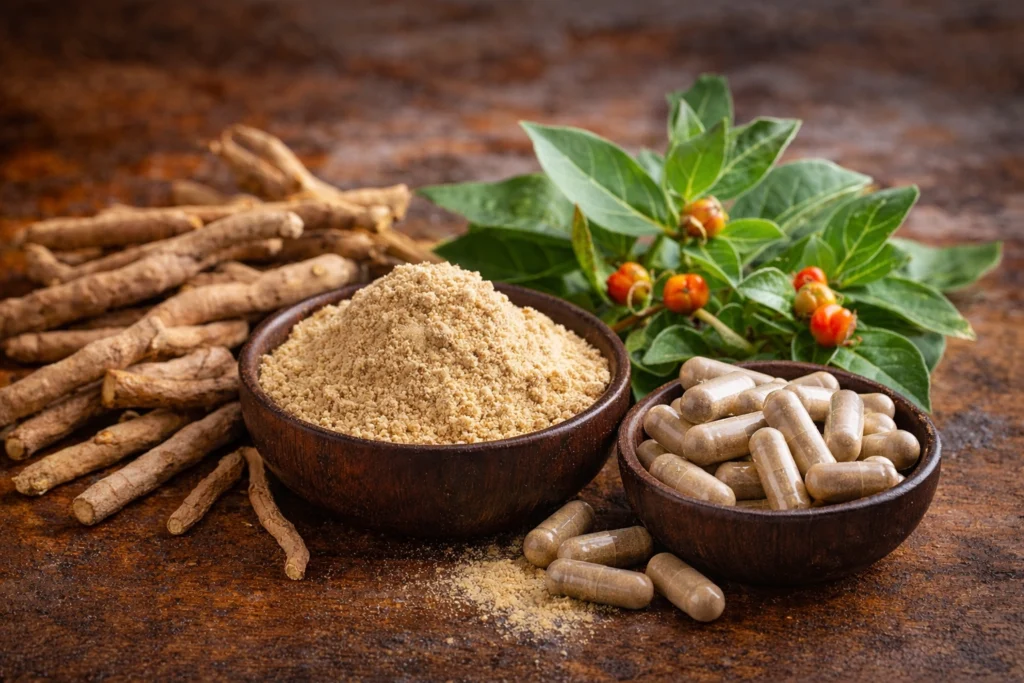
Ashwagandha, known botanically as Withania somnifera, is a sturdy plant belonging to the nightshade family. The name itself is derived from the Sanskrit words “ashva,” meaning horse, and “gandha,” meaning smell, which historically referred to both its unique earthy aroma and the traditional belief that it could provide the strength and vitality of a horse. While the berries and leaves have some uses, it is the plump, fleshy root that holds the majority of the plant’s therapeutic potential. In Ayurvedic tradition, it has been a staple for over 3,000 years, documented in ancient texts as a primary tool for rejuvenation and cognitive support.
Beyond its physical characteristics, Ashwagandha holds a prestigious place in the Ayurvedic pharmacopeia as a premiere adaptogen. Adaptogens are a unique class of herbs that are thought to help the body resist stressors of all kinds, whether physical, chemical, or biological. Historically, practitioners used the root to treat a variety of conditions, ranging from insomnia and nervous exhaustion to memory loss. Its significance lies in its holistic approach, as it does not just mask a symptom but instead aims to bring the entire human system back into a state of equilibrium, or homeostasis.
How Ashwagandha Works in the Body
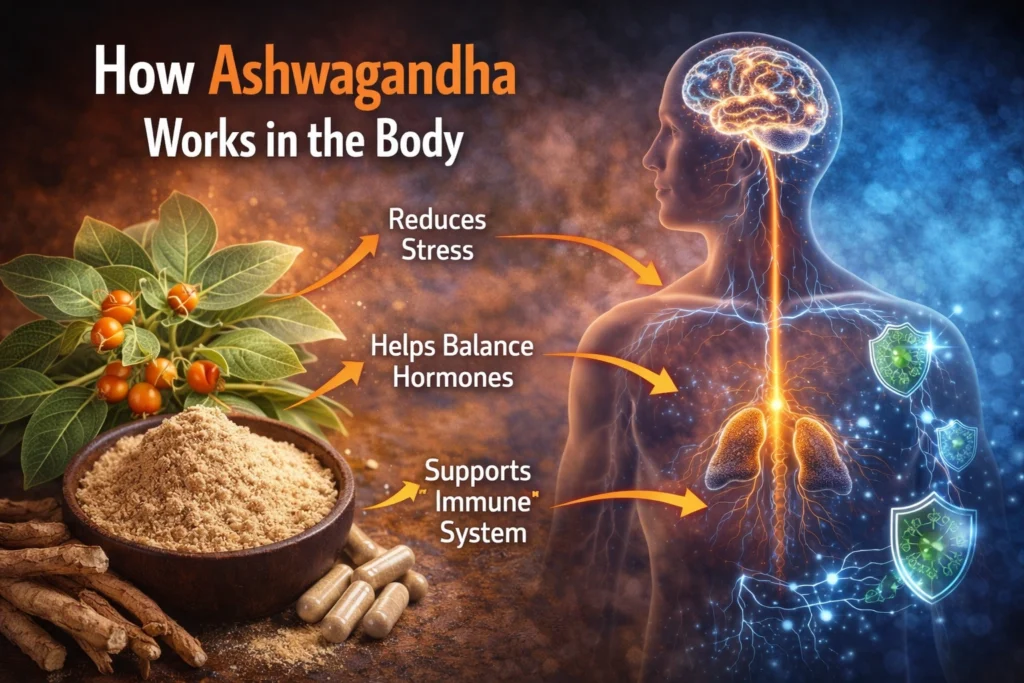
The magic of Ashwagandha lies in its complex chemical makeup, specifically a group of naturally occurring steroidal lactones known as withanolides. These active compounds are believed to be responsible for the herb’s significant physiological effects. When someone is looking for ways how to calm anxiety, they are essentially looking for a way to modulate their endocrine system. Ashwagandha is thought to interact with the hypothalamic-pituitary-adrenal axis, which is the command center for the body’s stress response. By helping to regulate the production of hormones like cortisol, the herb may prevent the nervous system from staying in a perpetual state of high alert.
On a biological level, research suggests that Ashwagandha also influences neurotransmitter pathways in the brain. It appears to have a GABAergic effect, meaning it may mimic or enhance the activity of gamma-aminobutyric acid, which is the primary inhibitory neurotransmitter responsible for inducing relaxation and reducing neuronal excitability. This dual action—lowering stress hormones while simultaneously signaling the brain to slow down—creates a powerful environment for the body to move out of fight-or-flight mode. It is this biological synergy that allows the herb to support both mental clarity and physical relaxation without the heavy sedative effects often found in other botanical interventions.
Health Benefits of Ashwagandha

Reduces Cortisol Levels and Stress
One of the most documented benefits of this herb is its ability to lower serum cortisol levels, which are often chronically elevated in those struggling with persistent tension. In various clinical settings, participants who were given standardized extracts of the root showed a significant reduction in their physiological markers of stress compared to those who received a placebo. This suggests that the herb acts as a buffer, preventing the adrenal glands from overproducing the very hormones that keep the mind in a state of hyper-vigilance.
Supports Cognitive Function and Memory
Many people find that chronic stress leads to a phenomenon often described as brain fog, where focusing on simple tasks becomes a challenge. Research indicates that the antioxidant properties found in this plant may protect nerve cells from free radical damage, thereby supporting better memory and task performance. Clinical observations have noted that individuals may experience improved attention spans and faster information processing speeds when the body is supported by the neuroprotective compounds found in the root.
Promotes Better Sleep Quality
Sleep is often the first thing to suffer when the mind is racing, yet it is the most critical component of recovery. Traditional Ayurvedic practice has long utilized this root to help individuals fall asleep more easily and achieve a deeper, more restorative rest. Modern studies have echoed this, showing that the plant may improve sleep latency and overall sleep efficiency. By helping the body transition from a state of arousal to a state of rest, it provides the foundation necessary for the brain to repair itself overnight.
Enhances Physical Endurance and Strength
While often sought for mental health, this herb also has a profound impact on physical vitality and muscle recovery. Clinical trials involving athletes and active individuals have shown that those utilizing the herb may experience significant gains in muscle mass and strength. This is likely due to the herb’s ability to reduce exercise-induced muscle damage and support a healthy balance of anabolic hormones. For someone trying to understand how to calm anxiety, the boost in physical resilience can be a vital part of feeling more capable and less fragile in daily life.
Balances Blood Sugar Levels
Emerging research suggests that the compounds in the root may help improve insulin sensitivity and regulate blood glucose levels. In several small studies, participants with various metabolic profiles saw a stabilization in their blood sugar after consistent use of the herb. This is particularly relevant for mental health, as blood sugar crashes can often trigger symptoms of irritability and panic, making a stable internal environment essential for emotional steadying.
Supports Heart Health and Circulation
The cardiovascular system is often under immense pressure during times of high stress, leading to increased blood pressure and heart rate. Some evidence suggests that the herb may help lower high blood pressure and reduce cholesterol levels, which contributes to overall heart health. By supporting a calmer circulatory system, the body is less likely to interpret a racing heart as a sign of immediate danger, helping to break the feedback loop of physical and mental distress.
Boosts Immune System Function
Chronic stress is known to suppress the immune system, making the body more vulnerable to illness and inflammation. Ashwagandha is considered an immunomodulator, meaning it helps to balance the immune response, neither overstimulating it nor allowing it to become sluggish. Research has shown that it can increase the activity of natural killer cells and improve white blood cell counts, providing a stronger shield against the physical toll that long-term worry can take on the body.
Scientific Research and Evidence
The scientific validation of Ashwagandha has grown significantly in recent years, with numerous researchers exploring its effects on the human nervous system. Dr. K. Chandrasekhar, who led a prominent study at the Asha Hospital in Hyderabad, India, in 2012, found that a high-concentration full-spectrum extract of Ashwagandha root safely and effectively improved an individual’s resistance toward stress. This study, published in the Indian Journal of Psychological Medicine, concluded that the participants experienced a significant reduction in cortisol levels, which is a key marker when investigating how to calm anxiety through natural means.
Source: https://pmc.ncbi.nlm.nih.gov/articles/PMC3573577/
Another significant finding comes from the work of Dr. Jaysing Salve and his team in 2019. According to researcher Jaysing Salve, a senior researcher involved in a randomized double-blind, placebo-controlled study published in Cureus, Ashwagandha root extract was associated with a statistically significant reduction in stress scales. The research noted that the herb appeared to be well-tolerated by participants over an eight-week period, supporting the traditional Ayurvedic view of the plant as a safe and stabilizing force for the mind.
Source: https://pubmed.ncbi.nlm.nih.gov/23055633/
Where to Find Ashwagandha
Finding high-quality Ashwagandha is easier today than ever before, as it has become one of the most popular herbal supplements globally. For those who prefer a hands-on shopping experience, local herbal shops and traditional Ayurvedic practitioners often carry the raw dried root or finely ground powders. Organic health markets and specialty grocery stores are also excellent sources, as they frequently prioritize brands that focus on sustainability and purity. When sourcing the herb locally, it can be helpful to look for products that are certified organic to ensure they are free from harmful pesticides.
The digital marketplace offers an even wider variety of options through platforms like Amazon, iHerb, and specialized botanical websites. When purchasing online, it is important to look for reputable brands that provide third-party testing results to verify the concentration of withanolides. Many high-quality extracts are labeled as KSM-66 or Sensoril, which are standardized forms used in many clinical trials. Checking for certifications such as Non-GMO, Vegan, or Fair Trade can also help ensure that the product is of the highest possible standard and ethically sourced.
How to Consume Ashwagandha

Herbal Tea or Infusion
In traditional Ayurvedic practice, the dried root is often simmered in water or milk to create a soothing tea. This method allows the heat to extract the beneficial compounds, while the act of sipping a warm beverage provides an immediate sense of comfort. Research into traditional consumption often notes that adding a fat source, like milk or ghee, may help the body absorb the fat-soluble withanolides more effectively.
Capsules and Tablets
For those seeking a more modern and convenient approach, the herb is widely available in capsule or tablet form. This method is frequently used in clinical studies because it allows for a precise and consistent dosage of the standardized extract. Many people find this to be an easy way to integrate the herb into a busy daily routine without the need for preparation or dealing with the root’s distinct taste.
Powdered Root in Foods
The raw powdered root can be incorporated into various culinary creations, such as smoothies, oatmeal, or energy balls. In historical contexts, the powder was often mixed with honey or warm water to make it more palatable. Because the taste can be quite bitter and earthy, blending it with stronger flavors like cinnamon, cacao, or almond butter is a common practice observed in modern wellness circles.
Liquid Tinctures and Extracts
Tinctures provide a concentrated liquid form of the herb, usually extracted using alcohol or glycerin. This method is often favored for its shelf stability and the ease with which the liquid can be added to a small amount of water or juice. Traditional herbalists often suggest that liquid extracts may be absorbed more quickly by the body, making them a popular choice for those looking for a versatile way to utilize the plant.
Safety and Side Effects
While Ashwagandha is generally considered safe for most people when used for short to medium durations, there are important safety considerations to keep in mind. Some individuals may experience mild side effects such as digestive upset, nausea, or drowsiness. Because the herb has a grounding and sedative-like effect, it may enhance the impact of other medications that promote sleep or reduce anxiety. It is also known to stimulate the immune system, which means people with autoimmune conditions should approach it with caution as it could potentially exacerbate their symptoms.
Certain groups of people should avoid the herb altogether unless otherwise directed by a professional. Pregnant women are advised against using it as it may have abortifacient properties in high doses. Similarly, those who are breastfeeding or people scheduled for surgery should exercise caution, as the herb can affect the central nervous system and blood sugar levels. It may also interact with medications for thyroid health, blood pressure, and diabetes. Always be aware that botanical substances are powerful and should be respected as part of a broader health strategy.
FAQ
Is it better to take Ashwagandha in the morning or at night?
Traditional use and modern research suggest that the timing can depend on the desired effect. Taking it in the evening may support better sleep quality by helping the body wind down, while morning use may help the body manage the stressors of the day ahead. Some clinical trials have participants split the dose between morning and evening to maintain a steady level of the active compounds in the system.
How long does it take to feel the effects of the herb?
While some people report feeling a sense of calm shortly after use, scientific studies typically show that the most significant benefits for stress and cortisol reduction appear after six to twelve weeks of consistent use. The herb works by gradually balancing the body’s systems rather than providing an instant fix, so patience is often cited as a key component of its effectiveness in traditional literature.
Can Ashwagandha be taken with other supplements?
In many Ayurvedic formulations, this root is often combined with other herbs like Brahmi or Shatavari to enhance its effects. However, it is important to be mindful of how different substances interact. Since the herb has a calming effect, combining it with other sedating supplements like valerian root or magnesium may increase drowsiness.
Does Ashwagandha affect hormone levels?
Yes, research indicates that the herb can influence several hormonal pathways, most notably cortisol and thyroid hormones. It has been observed to support thyroid function in some studies, which is why individuals with hyperthyroidism are often cautioned against its use. Its ability to balance the endocrine system is one of the primary reasons it is studied for its role in how to calm anxiety and improve physical vitality.
Is Ashwagandha safe for long-term use?
Most clinical trials have looked at the safety of the herb over a period of three to six months. While it has a long history of use in traditional medicine, there is less modern data on the effects of taking high-concentration extracts for several years without a break. Traditional practitioners often suggest “cycling” herbs, which means taking a break after a few months of use to allow the body to maintain its own natural balance.
Conclusion
Understanding how to calm anxiety is a deeply personal process that involves both the mind and the body. Ashwagandha stands as a testament to the power of ancient wisdom, offering a bridge for those feeling overwhelmed by the fast-paced demands of modern life. By supporting the nervous system, lowering cortisol, and encouraging a state of balance, this remarkable root provides a foundation upon which lasting peace can be built. The marriage of Ayurvedic tradition and modern scientific research continues to reveal just how effective this plant can be in helping the body move out of a state of survival and into a state of thriving.
As you explore the various ways to support your well-being, remember that every individual’s journey is unique. While the documented benefits of Ashwagandha are impressive, it is essential to approach any new herbal integration with care and mindfulness. The information shared here is intended to inform and inspire your path toward health. Before making any changes to your wellness routine or starting any new supplement, please consult with a qualified healthcare provider or a professional Ayurvedic practitioner to ensure it is the right choice for your specific needs. Balancing your nervous system is a beautiful act of self-care, and with the right guidance, you can find the calm you deserve.
Related Post: 8 Science-Backed Ways Bacopa Monnieri Reduces Stress & Anxiety for a Calmer Mind

One thought on “Why is Your Brain Stuck in Fight-or-Flight? How to Calm Anxiety by Rewiring Your Nervous System”