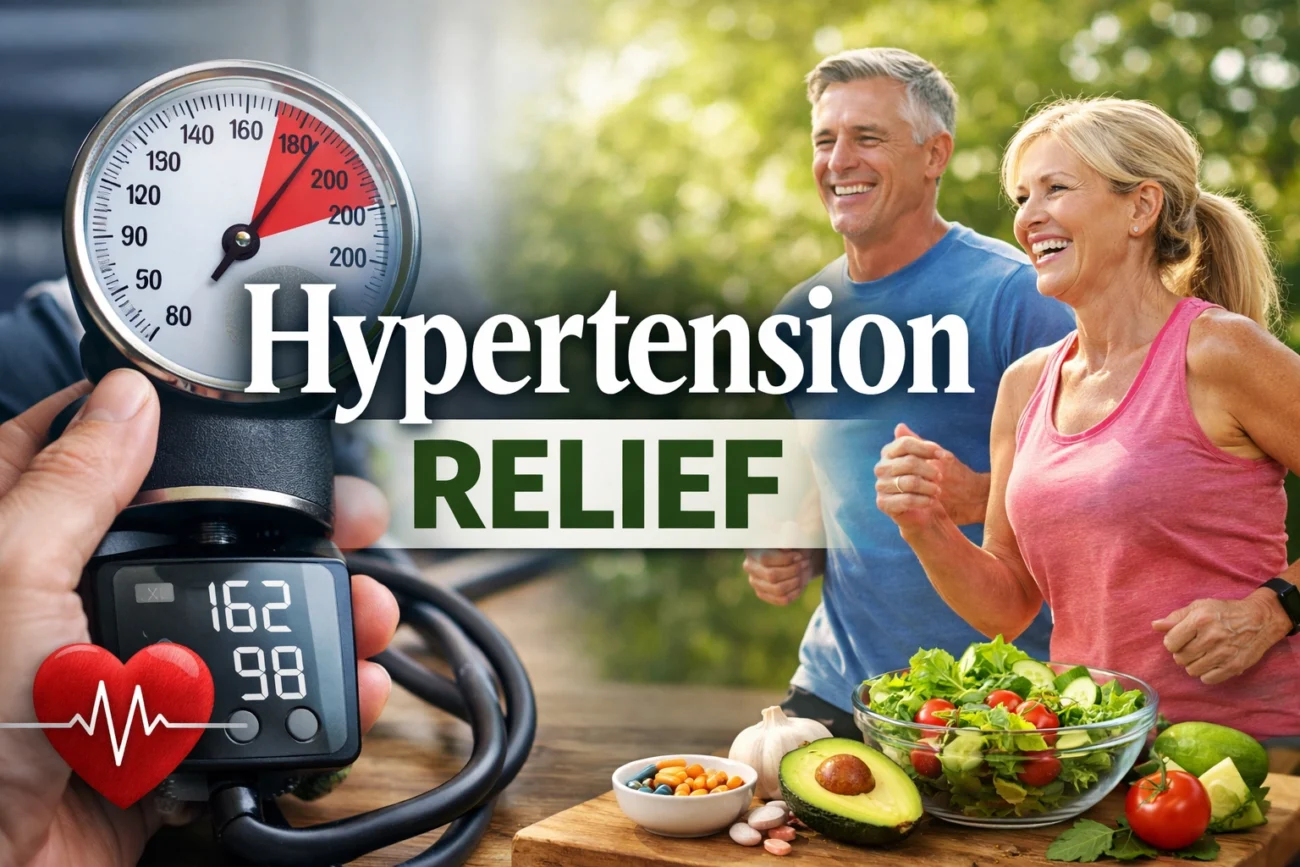
Imagine sitting in your kitchen, surrounded by the familiar scent of home-cooked meals, while worrying about your latest blood pressure reading. It is a heavy feeling that many of us carry, wondering if the secret to feeling lighter and healthier might be hidden in the very ingredients we use every day. Hypertension is often called a silent concern, but the ancient wisdom of the earth has provided us with tools that have stood the test of time, and today, modern science is finally catching up to what our ancestors always knew.
Garlic has been a cornerstone of healing for centuries, and its role in supporting a healthy heart is one of the most researched topics in natural wellness. In this article, you will explore the fascinating intersection of Ayurvedic tradition and clinical evidence regarding this pungent bulb. We will dive deep into how it interacts with your body, what the latest research says about its impact on hypertension, and how it has been traditionally prepared for maximum benefit.
The journey to cardiovascular wellness does not always have to start with complex labels or expensive imports. Sometimes, the most profound support comes from the simple, white cloves waiting in your pantry. By the end of this discussion, you will have a clear understanding of why garlic remains a global favorite for those looking to support their circulatory system naturally and safely.
What Is Hypertension?
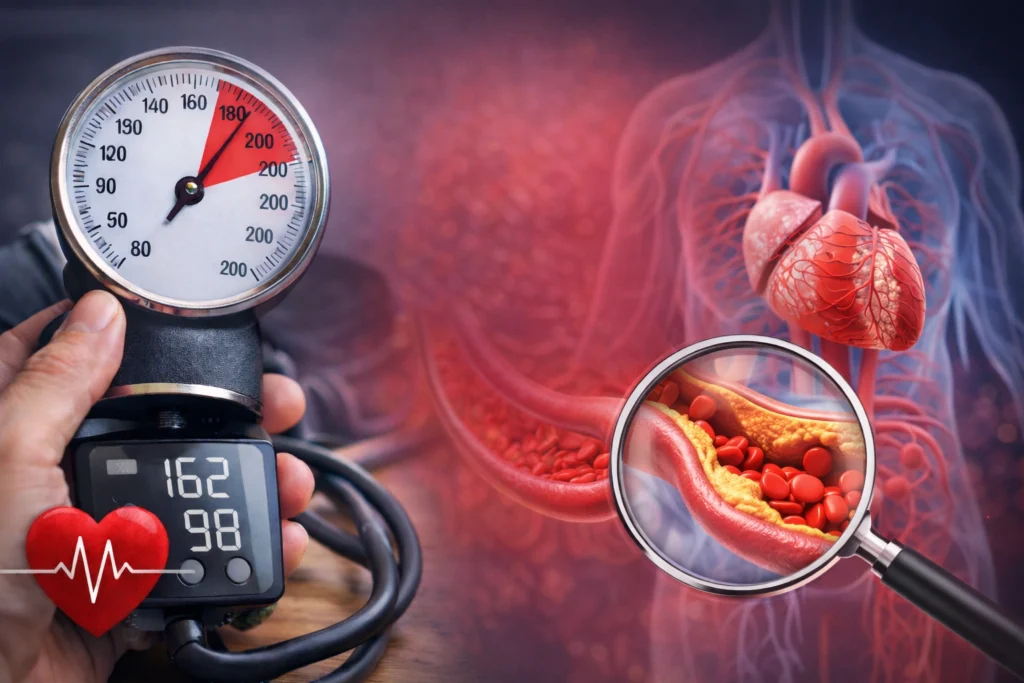
Hypertension, or high blood pressure, is a condition where the force of the blood against your artery walls is high enough that it may eventually cause health problems. In the world of botany, garlic is known as Allium sativum, a species in the onion genus that has been cultivated for over five thousand years. Historically, it was used by the Egyptians, Greeks, and Romans not just for flavor, but as a potent tonic for strength and resilience. In the context of traditional medicine, it is often viewed as a purifying agent that helps clear the pathways of the body.
From an Ayurvedic perspective, garlic is referred to as Rasona, which translates to “deficient in one taste” because it possesses five of the six tastes, lacking only the sour taste. It is highly valued for its heating energy and its ability to balance Vata, which is the internal force often associated with circulation and movement. Traditionally, it has been used to support the Agni, or digestive fire, while simultaneously working to clear blockages in the channels through which our life force and blood flow.
How Hypertension Is Influenced by Garlic in the Body
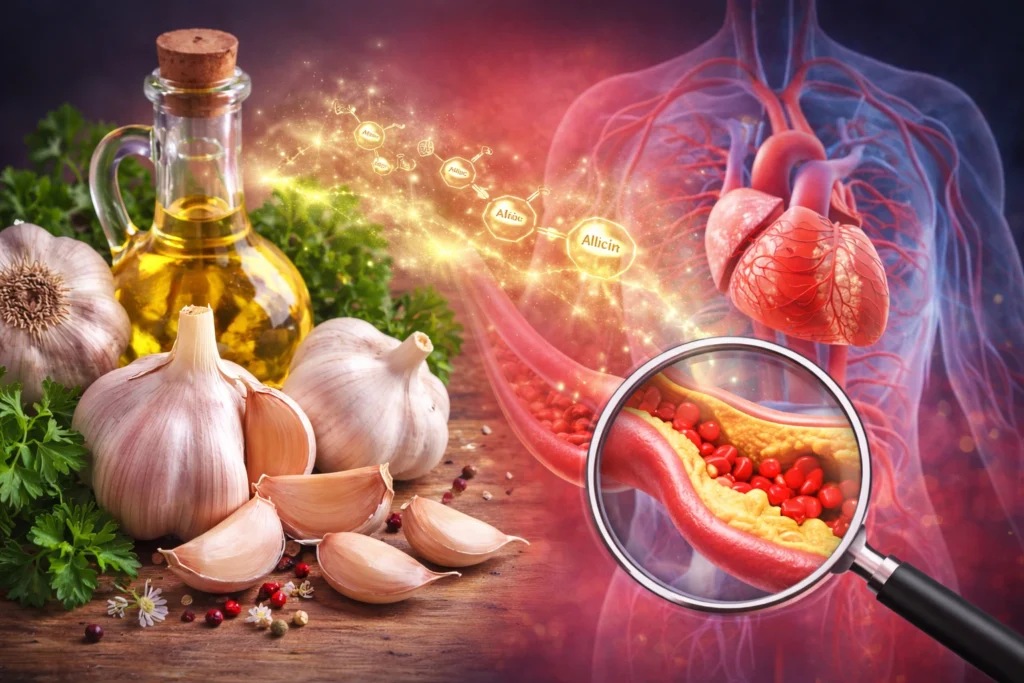
The biological magic of garlic happens the moment a clove is crushed or chopped. This action triggers an enzymatic reaction that produces allicin, a sulfur-containing compound responsible for both the distinct aroma and the primary health effects. Once in the system, these compounds interact with the endothelium, which is the thin layer of cells lining your blood vessels. Research indicates that garlic may help the production of nitric oxide, a molecule that signals the smooth muscles of the blood vessels to relax and dilate.
When blood vessels relax, the resistance to blood flow decreases, which is a key physiological mechanism in the management of hypertension. Ayurveda describes this process as clearing the Srotas, or channels. By reducing the buildup of toxins and supporting the fluidity of the blood, garlic helps the heart pump more efficiently without having to exert excessive force. This dual action of modern chemistry and ancient energetic balancing makes it a unique subject of study for those interested in total heart health.
Health Benefits of Hypertension Management with Garlic
Health Benefits of Hypertension
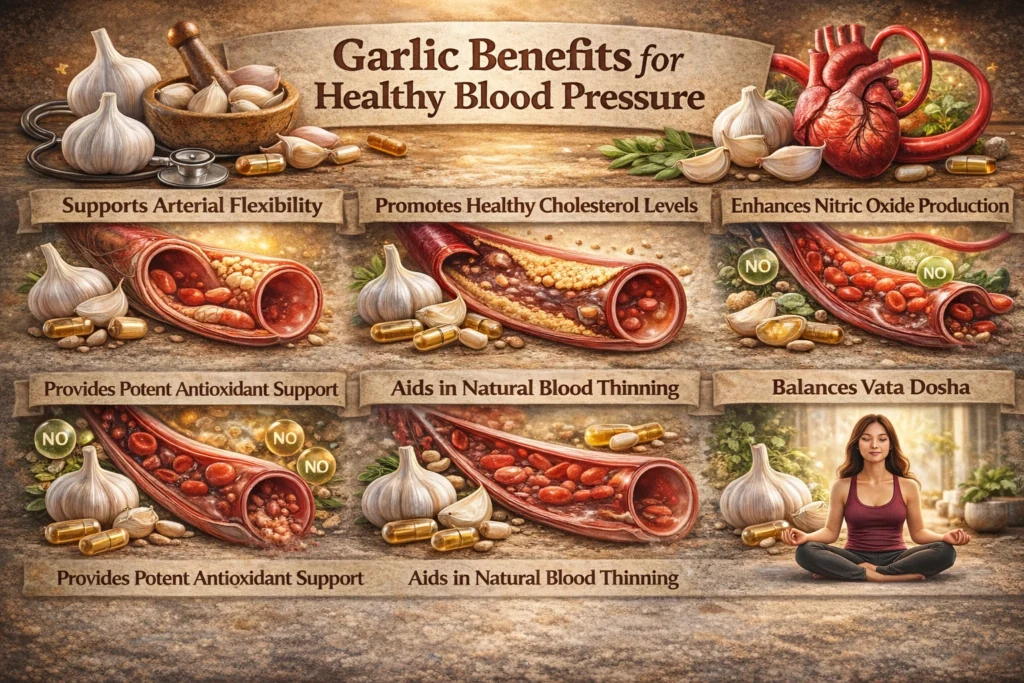
Supports Arterial Flexibility Maintaining the elasticity of your arteries is crucial for a healthy circulatory system as you age. Clinical observations have shown that the compounds in garlic help prevent the stiffening of blood vessels, allowing them to expand and contract more easily with each heartbeat. This natural flexibility is a major factor in how the body maintains a steady and healthy pressure throughout the day.
Promotes Healthy Cholesterol Levels A balanced lipid profile is often a secondary benefit for those focused on managing their blood pressure levels. Studies have documented that consistent consumption of garlic preparations can lead to a modest reduction in total cholesterol and LDL levels. By keeping the blood vessels clear of excessive fatty deposits, the heart can function with much less strain.
Enhances Nitric Oxide Production The ability of your body to signal its own vessels to relax is a fundamental part of cardiovascular health. Research highlights that garlic acts as a catalyst for nitric oxide synthase, which significantly boosts the availability of nitric oxide in the bloodstream. This physiological response is one of the most direct ways that kitchen-based ingredients can impact hypertension.
Provides Potent Antioxidant Support Oxidative stress is a hidden driver of vessel damage and rising blood pressure over time. Garlic is rich in antioxidants that neutralize free radicals, protecting the delicate lining of your veins and arteries from inflammation. This protective layer ensures that the system remains resilient against the daily stresses of modern life.
Aids in Natural Blood Thinning Healthy circulation requires that blood remains at an optimal viscosity to move through small capillaries without resistance. Scientific investigations have noted that garlic has mild anti-platelet effects, which help keep the blood flowing smoothly. This helps prevent the sluggish circulation that often accompanies high pressure readings.
Balances Vata Dosha In traditional Ayurvedic practice, the calming of excess movement and internal wind is essential for heart stability. Garlic is prized for its grounding properties, which help stabilize the nervous system and the rhythmic beating of the heart. By addressing the root energetic imbalance, it provides a holistic sense of calm to the entire circulatory map.
Scientific Research and Evidence
The relationship between garlic and hypertension has been extensively documented by experts across the globe. Dr. Karin Ried, a lead researcher and Associate Professor at the National Institute of Integrative Medicine, has conducted multiple meta-analyses on this subject. In a study published in the journal Maturitas in 2010, Dr. Ried and her team found that aged garlic extract was effective in reducing systolic blood pressure in individuals with uncontrolled hypertension. She noted that the mechanism involves the stimulation of intracellular nitric oxide and hydrogen sulfide, which promote vasodilation.
Source:https://pubmed.ncbi.nlm.nih.gov/20594781/
Another significant contribution comes from Dr. Khalid Rahman, a Professor of Physiological Chemistry at Liverpool John Moores University. In his research regarding the effects of garlic on cardiovascular disease markers, Dr. Rahman concluded that the sulfur compounds in garlic play a vital role in inhibiting the enzymes involved in lipid synthesis. His work emphasizes that garlic does not just act on pressure alone but improves the overall environment of the blood.
Source:https://pubmed.ncbi.nlm.nih.gov/16484553/
Furthermore, Dr. Matthew Budoff, a cardiologist at the Lundquist Institute, has spent years studying how garlic affects arterial plaque. In his 2016 study published in the Journal of Nutrition, Dr. Budoff observed that aged garlic extract could slow the progression of coronary artery calcification. He found that participants using the extract had a lower accumulation of soft plaque, which is the type most likely to cause cardiovascular events, thereby indirectly assisting in the stabilization of hypertension.
Source:https://pubmed.ncbi.nlm.nih.gov/26764322/
Where to Find Garlic
Finding high-quality garlic is fortunately very simple, as it is a staple in almost every local grocery store and organic health market. When looking for fresh cloves, it is best to choose bulbs that are firm to the touch with plenty of papery skin intact, avoiding any that show signs of sprouting or soft spots. Organic varieties are often preferred in Ayurvedic practice to ensure the herb is free from synthetic pesticides that might interfere with its natural healing properties.
For those who prefer standardized forms, garlic is widely available in health food stores and online platforms like Amazon or iHerb. You can find it in several versions, including aged garlic extract, steam-distilled oil, and garlic powder tablets. When purchasing these, looking for products that specify their allicin content or those that use a “deodorized” process can be helpful for those who are sensitive to the strong odor.
How to Consume Hypertension Supporting Garlic
Raw Crushed Cloves
In many traditional settings, the most common way to utilize garlic is to crush a fresh clove and let it sit for ten minutes before use. This waiting period allows the allicin to fully develop before it is introduced to heat or digestion. Historically, this raw form is considered the most potent way to access the herb’s cardiovascular benefits.
Aged Garlic Extract
Clinical research often focuses on aged garlic extract, which is created by soaking sliced garlic in an ethanol solution for up to twenty months. This process converts the harsh compounds into stable, odorless water-soluble antioxidants like S-allyl cysteine. Studies frequently use this form because it is gentle on the stomach while remaining highly bioavailable for the heart.
Garlic Infused Honey
In Ayurvedic traditions, garlic is sometimes fermented or infused in raw honey to balance its intense heating properties. This combination is thought to make the garlic more palatable and easier for the digestive system to process. The honey acts as a carrier, or Anupana, helping the active ingredients reach the deeper tissues of the body more effectively.
Cooked in Medicinal Ghee
Another traditional method involves lightly sautéing garlic in grass-fed ghee or healthy oils to be included in meals. While intense heat can diminish some of the allicin, cooking garlic makes it much more balancing for those with a sensitive Pitta constitution. This method ensures that the heart benefits are integrated into a nourishing, daily diet.
Safety and Side Effects
While garlic is a natural food item, it is powerful and should be treated with respect. Some individuals may experience digestive upset, heartburn, or a lingering odor on the breath and skin. Because garlic has natural blood-thinning properties, it is particularly important for those scheduled for surgery or those taking anticoagulant medications to be cautious. Excessive consumption can potentially increase the risk of bleeding in these specific scenarios.
Pregnant and breastfeeding women should stick to the amounts typically found in food rather than therapeutic doses unless guided by a professional. Additionally, those with very low blood pressure should be aware that garlic may further lower their levels. It is also known to interact with certain medications used for HIV/AIDS and some birth control pills by speeding up how the liver breaks down these drugs, potentially making them less effective.
FAQ
Is raw garlic better than cooked garlic for blood pressure?
Research suggests that raw garlic contains higher levels of allicin, which is the primary compound associated with blood pressure support. Cooking garlic at high temperatures for long periods can deactivate the enzymes responsible for creating allicin. Therefore, many studies and traditional practices emphasize using raw or lightly aged preparations when the goal is to impact hypertension specifically.
How long does it take to see results from using garlic?
In most clinical trials, such as those conducted by Dr. Karin Ried, significant changes in blood pressure were usually observed after eight to twelve weeks of consistent use. Herbal interventions typically work more slowly and subtly than synthetic ones, focusing on shifting the body’s internal environment over time rather than providing an instant fix.
Can garlic replace my blood pressure medication?
It is vital to understand that garlic is a supportive dietary tool and not a direct replacement for prescribed medical treatments. While studies have shown it can be effective, you should never stop or change your medication without the direct supervision of your doctor. Hypertension is a serious condition that requires a comprehensive management plan.
Does garlic breath mean it is working?
The odor associated with garlic comes from the sulfur compounds that provide its health benefits. While “garlic breath” is a sign that these compounds are present in your system, many modern extracts are designed to be odorless while still retaining the active S-allyl cysteine. Therefore, you do not necessarily need to smell like garlic to receive its cardiovascular support.
Is it safe to eat garlic every day?
For most people, incorporating a clove or two of garlic into their daily diet is considered safe and health-promoting. However, everyone’s tolerance is different, especially regarding the digestive tract. Monitoring how your body feels and discussing your intake with an Ayurvedic practitioner can help you find a balance that works for your unique constitution.
Conclusion
The journey through the science and tradition of garlic reveals a remarkable truth: some of our most powerful health allies are also our most humble. From the ancient texts of Ayurveda that labeled it a life-giving tonic to the modern laboratories where researchers verify its ability to relax blood vessels, garlic remains a superstar of heart health. Addressing hypertension requires a multifaceted approach, and the evidence suggests that this pungent bulb can play a meaningful role in that strategy.
By understanding the importance of allicin and the way garlic supports nitric oxide production, you can appreciate the profound impact that simple dietary choices have on your long-term vitality. Whether it is the traditional use of crushed cloves or the scientifically backed aged extracts, the goal is always to create a more resilient and flexible circulatory system. It is a beautiful example of how nature provides us with the raw materials to support our own healing.
However, because your health is unique and hypertension is a complex condition, it is absolutely essential to consult with a qualified healthcare provider or a licensed Ayurvedic practitioner before making any changes to your routine. They can help you navigate potential interactions and ensure that your path toward heart health is both safe and effective. Taking that step ensures that you are not just following a trend, but making an informed decision for your long-term well-being.
Related Post: 7 Remarkable Benefits of Terminalia Arjuna for Every Heart Problem

2 thoughts on “Hypertension Relief in Your Kitchen? Can Raw Garlic Really Outperform Supplements?”