

Introduction:
Thyme is a powerful aromatic herb widely used in cooking and traditional medicine. Known for its strong fragrance and medicinal properties, thyme has been valued for centuries in both Western herbalism and Ayurveda. It is commonly used to support respiratory health, digestion, and immunity.
In Ayurveda, thyme is considered a warming herb that helps balance Kapha and Vata dosha. Its natural antimicrobial and antioxidant properties make it highly effective in maintaining overall health.
In this article, you will learn about thyme herbal benefits, how it works in the body, scientific evidence behind its uses, and the best ways to consume it safely.
What Is Thyme?:

Thyme, scientifically known as Thymus vulgaris, is a perennial herb belonging to the mint family (Lamiaceae). It is native to the Mediterranean region and has been used since ancient times for its healing and preservative properties.
Historically, thyme was used by Egyptians for embalming and by Greeks as incense in temples. In Ayurveda, although not traditionally native, thyme is recognized for its deep-penetrating and cleansing qualities, especially for respiratory and digestive systems.
Ayurvedically, thyme is considered:
- Rasa (Taste): Katu (pungent), Tikta (bitter)
- Virya (Potency): Ushna (heating)
- Vipaka (Post-digestive effect): Katu
- Dosha effect: Reduces Kapha and Vata
How This Herb Works in the Body:
Thyme works through a combination of Ayurvedic principles and modern biochemical actions.
From an Ayurvedic perspective, thyme stimulates Agni (digestive fire), removes Ama (toxins), and clears respiratory channels. Its warming nature helps reduce mucus and improve circulation.
Scientifically, thyme contains powerful active compounds such as:
- Thymol (strong antimicrobial agent)
- Carvacrol (anti-inflammatory and antioxidant)
- Flavonoids (cell-protective compounds)
These compounds help fight infections, reduce inflammation, and support immune function. Thyme also has bronchodilator properties, making it beneficial for respiratory health.
Health Benefits of Thyme:

1. Supports Respiratory Health:
Thyme is highly effective for cough, bronchitis, and congestion. It helps loosen mucus and acts as a natural expectorant. Thymol helps kill bacteria in the respiratory tract.
2. Boosts Immunity:
Thyme contains antioxidants and antimicrobial compounds that strengthen the immune system. Regular use may help reduce the frequency of infections.
3. Improves Digestion:
In Ayurveda, thyme stimulates digestive enzymes and reduces bloating, gas, and indigestion. It also helps eliminate harmful gut bacteria.
4. Natural Antibacterial and Antifungal:
Thyme has strong antimicrobial properties. It can help fight infections caused by bacteria and fungi, making it useful for oral health and skin issues.
5. Reduces Inflammation:
The flavonoids in thyme help reduce inflammation in the body, which may support conditions like arthritis and chronic pain.
6. Supports Heart Health:
Thyme may help regulate blood pressure and improve circulation due to its antioxidant and anti-inflammatory properties.
7. Enhances Mental Clarity:
Its aromatic compounds have mild calming effects that can reduce stress and improve focus.
8. Promotes Skin Health:
Thyme’s antibacterial properties can help treat acne and minor skin infections when used topically.
Scientific Research and Evidence:
Thyme’s medicinal benefits are supported by several scientific studies:
- Thyme essential oil shows strong antibacterial activity against pathogens. NCBI Study
- Thymol has been shown to have anti-inflammatory and antioxidant effects. PubMed Study
- Thyme extract demonstrated effectiveness in treating respiratory infections. NIH Study
- Carvacrol in thyme has antimicrobial and immune-supporting properties. WHO Report
These findings support thyme’s traditional use as a medicinal herb.
Where to Find Thyme:
Thyme is widely available and can be found in:
- Ayurvedic and herbal stores
- Organic health markets
- Online platforms like Amazon and iHerb
When purchasing thyme:
Choose organic and pesticide-free products.
Look for fresh aroma and green color in dried thyme.
Prefer certified brands with quality assurance.
How to Consume Thyme:
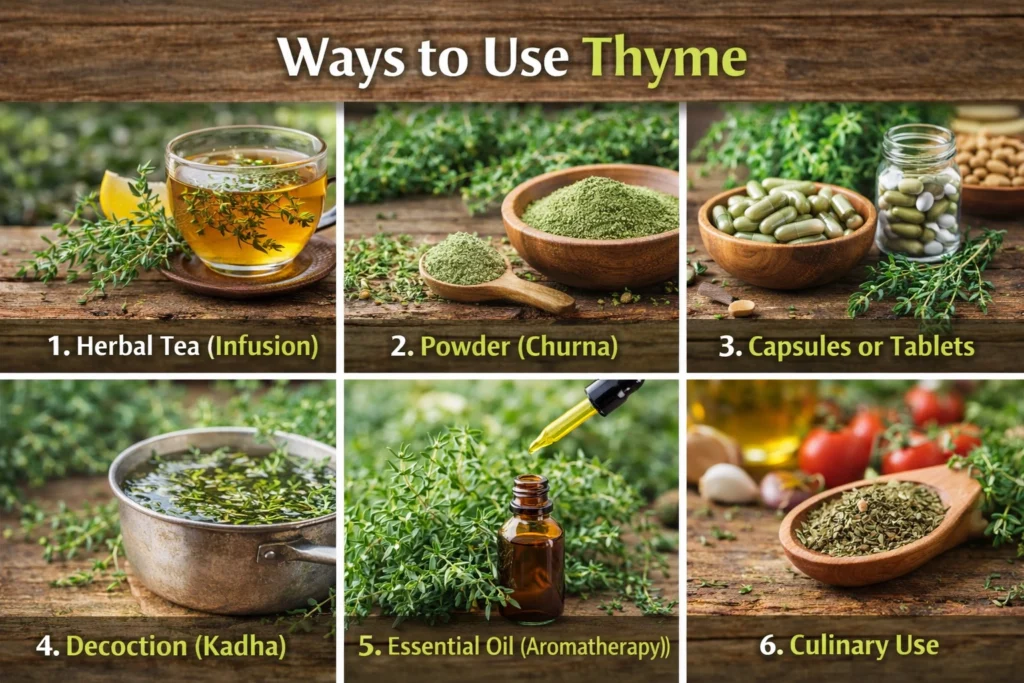
1. Herbal Tea (Infusion):
Steep dried thyme leaves in hot water for 5–10 minutes. This is one of the best ways to support immunity and respiratory health.
2. Powder (Churna):
Thyme powder can be mixed with warm water or honey for digestive benefits.
3. Capsules or Tablets:
Available as supplements for convenient daily intake.
4. Decoction (Kadha):
Boil thyme with ginger and tulsi for a stronger medicinal drink.
5. Essential Oil (Aromatherapy):
Used in diffusers for respiratory relief and mental clarity.
6. Culinary Use:
Thyme can be added to soups, vegetables, and herbal recipes.
Recommended Dosage:
- Tea: 1–2 cups daily
- Powder: 1–2 grams per day
- Capsules: As per label instructions
- Decoction: 30–50 ml once or twice daily
Dosage may vary depending on age, health condition, and individual needs.
Safety and Side Effects:
Thyme is generally safe when used in moderate amounts, but some precautions should be considered.
Excess consumption may cause stomach irritation or allergic reactions. Pregnant and breastfeeding women should consult a doctor before use. People with thyroid disorders or those taking blood-thinning medications should use caution.
Always start with a small dose to check tolerance.
FAQ
Can thyme be taken daily?
Yes, thyme can be consumed daily in moderate amounts, especially as tea or in food.
Is thyme good for cough?
Yes, thyme is highly effective for cough and respiratory issues due to its expectorant properties.
Does thyme boost immunity?
Yes, thyme contains antioxidants and antimicrobial compounds that support immune health.
Can thyme help with digestion?
Yes, thyme improves digestion by stimulating digestive enzymes and reducing gas.
Is thyme safe for children?
In small amounts, thyme tea may be safe, but always consult a doctor before giving it to children.
Conclusion:
Thyme is a powerful herb that offers a wide range of health benefits, from improving respiratory health to boosting immunity and aiding digestion. Its use in both Ayurveda and modern medicine highlights its versatility and effectiveness.
Scientific research supports many of thyme’s traditional uses, particularly its antimicrobial and anti-inflammatory properties. This makes it a valuable addition to a natural wellness routine.
However, like any herbal remedy, thyme should be used mindfully. Consulting a healthcare professional ensures safe and effective use, especially for individuals with existing health conditions.
DISCLAIMER:
The information provided in this article is for educational and informational purposes only. It is not intended to be a substitute for professional medical advice, diagnosis, or treatment. Always consult a qualified healthcare provider or licensed Ayurvedic practitioner before starting any herbal supplement, especially if you are pregnant, nursing, taking medications, or have an existing health condition.
Resent Post: Why Do You Feel Tired Every Morning? Try This amazing Ayurvedic Fix in 7 days



1 thought on “Thyme Herbal Benefits: 8 Science-Backed Health Amazing Benefits, Uses & Ayurvedic Insights”