
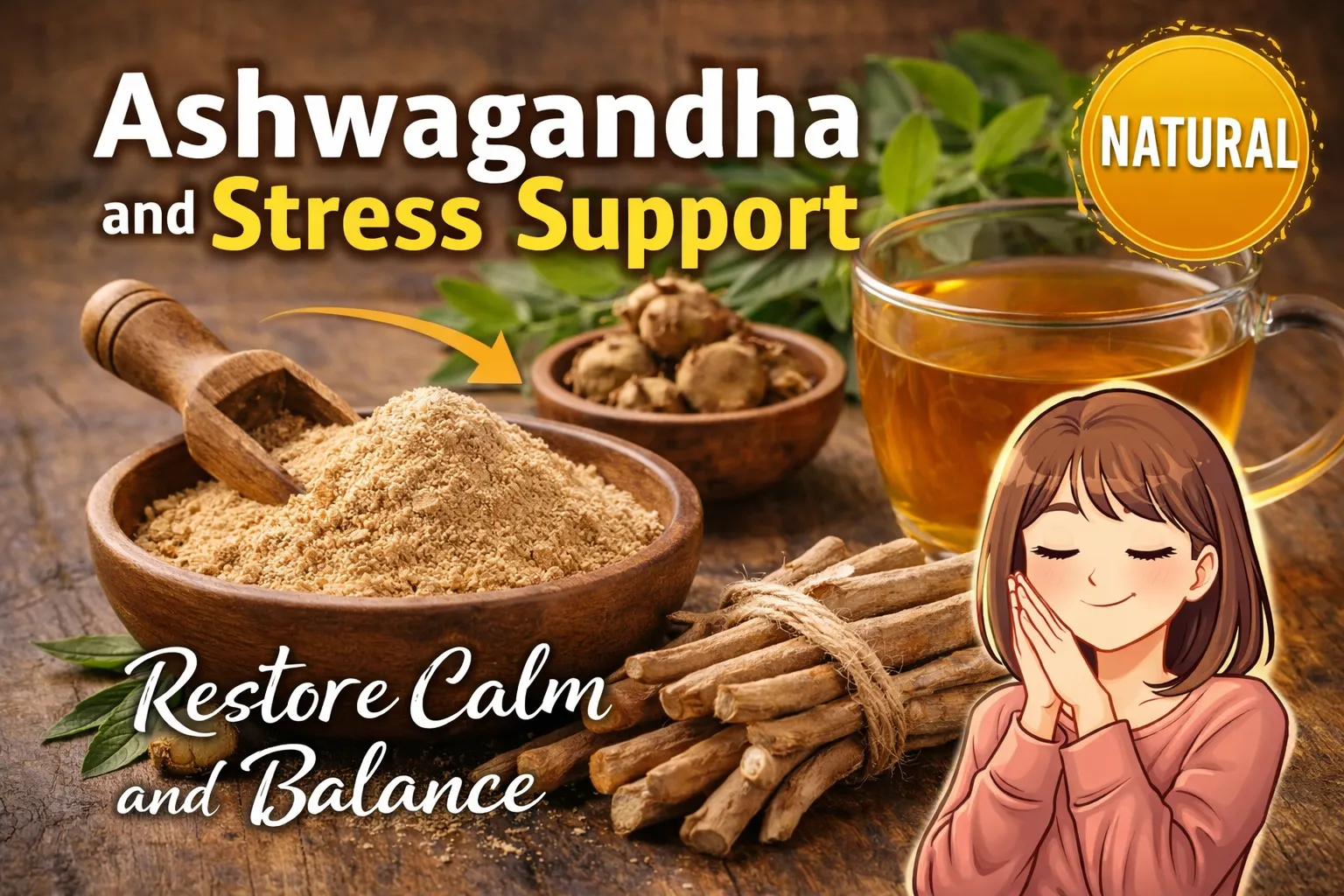
Ashwagandha and stress support have become increasingly popular topics in the field of natural wellness. In today’s fast-paced world, stress has become a common challenge for many individuals. Work pressure, digital overload, lack of proper rest, and demanding schedules can all contribute to mental fatigue and emotional imbalance. As a result, people across the United States are actively searching for natural solutions that can help them manage stress while supporting their overall well-being.
One herb that frequently appears in these discussions is ashwagandha. Known scientifically as Withania somnifera, ashwagandha has been used for centuries in traditional herbal practices. Modern research institutions are now examining this ancient plant more closely to understand how it may help support the body’s response to stress. Many wellness experts consider ashwagandha to be an adaptogenic herb, meaning it may help the body adapt more effectively to physical and emotional stress.
This article explores the relationship between ashwagandha and stress support, including how the herb works, what scientific studies suggest, and practical ways people may incorporate it into their daily wellness routines.
What Is Ashwagandha?
Ashwagandha is a small shrub native to parts of India, the Middle East, and North Africa. Its roots and leaves have been used for generations in traditional herbal systems. The root of the plant is especially valued for its potential wellness properties and is commonly used in powders, capsules, teas, and herbal extracts.
The plant contains several active compounds known as withanolides, which researchers believe play a role in many of its potential health-supporting effects. These compounds have been studied for their potential influence on the body’s stress response and overall balance.
In traditional herbal practices, ashwagandha has often been associated with promoting vitality, supporting calmness, and improving overall resilience. Today, the herb is widely used in modern wellness supplements, particularly those designed to support relaxation and emotional balance.
Ashwagandha and Stress Support
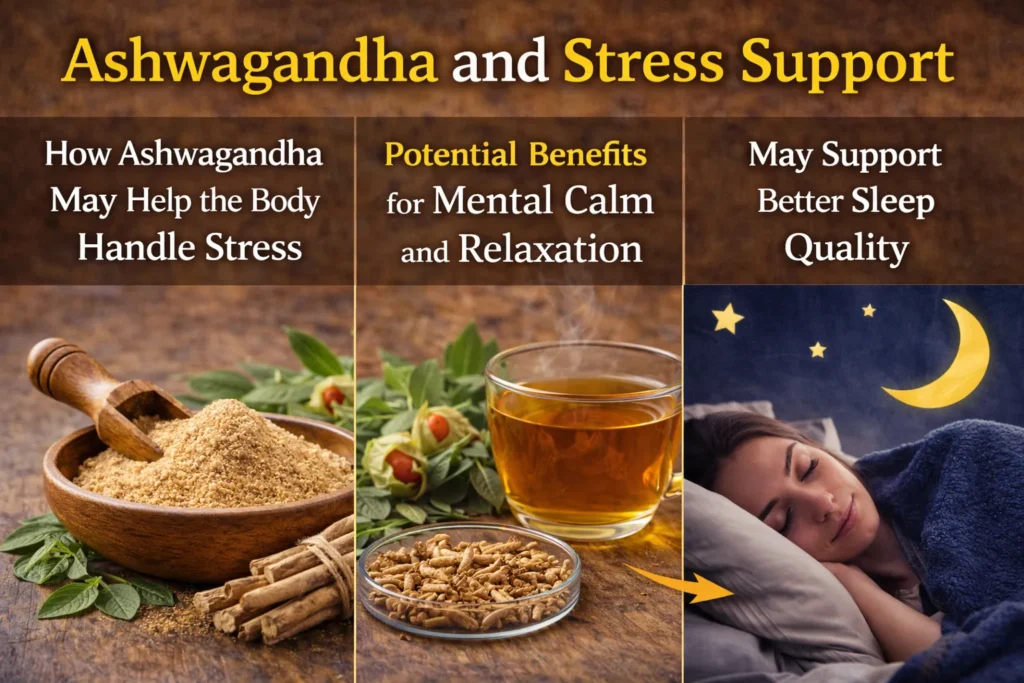
How Ashwagandha May Help the Body Handle Stress
One of the most widely discussed topics in herbal wellness is the relationship between ashwagandha and stress support. Stress affects the body through complex biological systems, including the release of stress hormones such as cortisol.
Some scientific research suggests that ashwagandha may help support the body’s natural stress response by influencing the hypothalamic-pituitary-adrenal (HPA) axis, which plays a role in regulating stress hormones. When the body experiences prolonged stress, cortisol levels may remain elevated for long periods. Adaptogenic herbs such as ashwagandha may help support balance within this system.
Researchers studying herbal adaptogens have explored how ashwagandha might help the body maintain a more stable stress response, potentially supporting a sense of calm and emotional balance.
Potential Benefits for Mental Calm and Relaxation
Another reason many people explore ashwagandha and stress support is the herb’s potential role in promoting relaxation. Chronic stress often leads to feelings of mental fatigue, irritability, and difficulty concentrating.
Some studies have examined how ashwagandha supplementation may influence perceived stress levels. Certain research findings suggest that individuals taking ashwagandha extracts reported improvements in stress-related symptoms compared to placebo groups. These findings have sparked growing interest among researchers studying plant-based wellness solutions.
Although more research is still ongoing, early results indicate that ashwagandha may play a supportive role in promoting mental calmness.
May Support Better Sleep Quality
Stress often interferes with sleep patterns. When the mind remains active or anxious, falling asleep can become difficult. Poor sleep can then increase stress levels, creating a cycle that becomes challenging to break.
Ashwagandha has traditionally been associated with promoting restful sleep. Some researchers believe the herb may support relaxation pathways in the body that help prepare the mind for rest. While it is not considered a sedative, it may help promote a sense of calm that encourages healthier sleep patterns.
Because of this connection, many stress-support supplements combine ashwagandha with other herbs that promote relaxation and sleep quality.
Scientific Research on Ashwagandha

Interest in ashwagandha has increased significantly in modern scientific research. Organizations such as the National Institutes of Health have reviewed studies examining the herb’s potential effects on stress and mental well-being.
Some clinical studies have investigated standardized ashwagandha extracts and their potential influence on perceived stress levels. In several studies, participants who consumed ashwagandha extracts experienced improvements in stress markers compared with control groups.
Researchers from universities studying herbal medicine and adaptogenic plants continue to explore how compounds within ashwagandha interact with the body’s stress regulation systems. While ongoing research is necessary to fully understand the herb’s effects, current findings suggest that ashwagandha may offer supportive benefits for individuals experiencing stress.
Practical Ways to Use Ashwagandha
Ashwagandha Powder
One of the traditional ways to consume ashwagandha is in powdered form. The powder is often mixed with warm milk, herbal tea, or smoothies. This method has been used in traditional wellness routines for many years.
Because the flavor of ashwagandha can be slightly earthy or bitter, some people combine it with honey or spices such as cinnamon to improve the taste.
Ashwagandha Capsules or Supplements
In modern wellness practices, many people choose ashwagandha supplements for convenience. Capsules and standardized extracts provide consistent doses of the herb and are widely available in health food stores and online marketplaces across the United States.
Popular retailers such as Whole Foods Market, Walgreens, and many natural wellness stores often carry ashwagandha supplements.
Ashwagandha Herbal Tea
Some herbal tea blends include ashwagandha root along with calming herbs such as chamomile or holy basil. These teas are often consumed in the evening to support relaxation.
A warm cup of herbal tea containing ashwagandha can become a calming ritual after a long day.
Safety and Professional Guidance
Although ashwagandha has a long history of traditional use, it is important to approach herbal supplements responsibly. Health organizations recommend consulting a qualified healthcare professional before beginning any new supplement, especially for individuals who are pregnant, taking medications, or managing medical conditions.
The National Center for Complementary and Integrative Health notes that herbal supplements may interact with certain medications or health conditions. Therefore, professional guidance helps ensure safe and appropriate use.
FAQ
What is ashwagandha commonly used for?
Ashwagandha is commonly used in wellness practices for stress support, relaxation, and overall vitality.
Can ashwagandha help with stress?
Some research suggests that ashwagandha may help support the body’s natural response to stress and promote emotional balance.
Is ashwagandha safe to take daily?
Many people take ashwagandha regularly in moderate amounts, but it is best to consult a healthcare professional before using herbal supplements.
How long does it take for ashwagandha to support stress relief?
Some studies suggest individuals may notice benefits after several weeks of consistent use, although experiences can vary.
Where can ashwagandha supplements be found?
Ashwagandha products are widely available in health food stores, pharmacies, and online wellness retailers across the United States.
Conclusion
Modern lifestyles often expose individuals to constant stress, which can affect both mental and physical well-being. As people continue searching for natural ways to support balance and resilience, herbal adaptogens have gained significant attention.
The connection between ashwagandha and stress support highlights the growing interest in plant-based wellness solutions. With its long history of traditional use and increasing scientific research, ashwagandha remains one of the most recognized herbs for promoting calmness and emotional balance.
When used responsibly and alongside healthy lifestyle habits such as balanced nutrition, exercise, and adequate sleep, ashwagandha may become a helpful addition to a daily wellness routine focused on managing stress and maintaining overall health.