

Have you ever felt like your brain is a computer with too many tabs open, slowly draining your mental energy until you can barely remember where you put your keys? In our hyper-connected world, mental burnout and brain fog have become an all-too-common reality that many of us simply accept as part of life. However, if you are searching for a way to reclaim your focus, you may find your answer in the delicate blue petals of Shankhpushpi, known as the ancient Ayurvedic nootropic backed by modern neuroscience. This humble plant has been used for millennia to sharpen the intellect and soothe the soul, acting as a natural bridge between ancient wisdom and our modern need for cognitive resilience.
Originating in the sun-drenched plains of India, this creeping herb belongs to a sacred class of plants that Ayurvedic practitioners have long revered for their ability to rejuvenate the nervous system. While many modern supplements rely on jittery stimulants to provide a temporary boost, this botanical treasure works by nourishing the very tissues of your brain. In this article, we will peel back the layers of tradition and science to show you how this plant can transform your mental landscape. You will learn about its botanical origins, its fascinating impact on your brain chemistry, and how you can practically integrate it into your daily wellness routine to keep your mind vibrant and clear.
What Is The Ancient Ayurvedic Nootropic Backed by Modern Neuroscience?
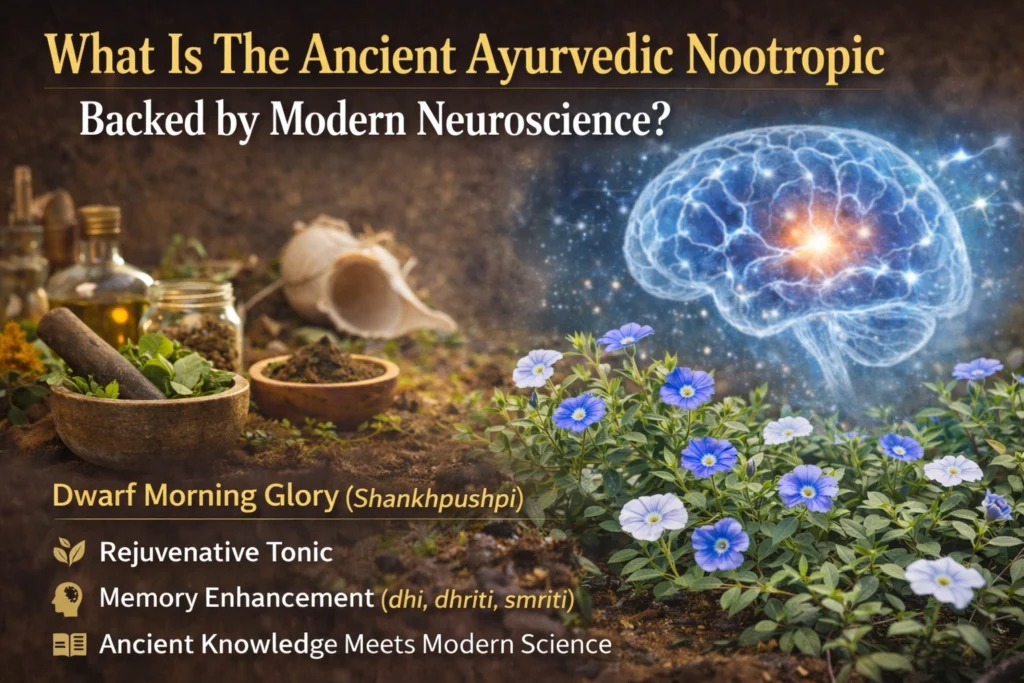
Dwarf Morning Glory, known scientifically as Convolvulus pluricaulis, is the botanical identity behind the legendary name Shankhpushpi. The name itself is derived from the Sanskrit words for conch and flower, referencing the beautiful shape of its blossoms which resemble a sacred shell. It is a perennial herb that stays close to the earth, spreading its slender branches across the ground and blooming with white or light blue flowers. In the classical texts of Ayurveda, it is categorized as a Medhya Rasayana, a specific type of rejuvenative tonic that is believed to enhance dhi, dhriti, and smriti—the three pillars of the mind representing learning, retention, and recall.
For thousands of years, this plant has been more than just a remedy; it was a fundamental tool for scholars and students who needed to memorize vast amounts of information with precision. Traditional preparation involves using the whole plant, including the roots, leaves, and flowers, to capture the full spectrum of its healing energy. Unlike many other herbs that might target a specific organ, this one is seen as a universal tonic for the mind, capable of balancing the psychological humors and ensuring that the intellect remains bright even under pressure.
How The Ancient Ayurvedic Nootropic Backed by Modern Neuroscience Works in the Body

From a traditional perspective, the herb works by pacifying the Vata and Pitta doshas within the mind and nervous system. When Vata is aggravated, you might experience anxiety or scattered thoughts, while excess Pitta can lead to irritability and mental heat. By providing a cooling and grounding influence, the herb creates a stable foundation for the intellect to function without the interference of emotional turbulence. It is said to increase the flow of Prana, or life force energy, specifically to the brain, ensuring that every neuron is adequately nourished and energized.
Modern neuroscience offers a complementary view, identifying several key phytochemicals such as alkaloids, flavonoids, and glycosides that interact with our biology. These compounds appear to stimulate the production of nerve growth factor, which is essential for the health and repair of brain cells. Research suggests that the herb modulates the cholinergic system, increasing levels of acetylcholine, a neurotransmitter that is crucial for memory and learning. By simultaneously reducing oxidative stress and lowering cortisol levels, it protects the brain from the damaging effects of chronic stress while enhancing the efficiency of synaptic communication.
Health Benefits of The Ancient Ayurvedic Nootropic Backed by Modern Neuroscience

Enhances Memory and Cognitive Function
One of the primary reasons people turn to this herb is its profound ability to help you learn and remember information more effectively. It supports the consolidation of memory, which is the process by which short-term memories are converted into long-term ones. By strengthening these neural connections, the herb makes it feel easier for you to access information when you need it most, whether you are in a high-stakes meeting or a classroom setting.
Reduces Anxiety and Mental Stress
In the midst of a stressful day, this plant acts as a natural tranquilizer that helps you maintain your composure without making you feel drowsy. It works by regulating the hypothalamic-pituitary-adrenal axis, which is the body’s primary stress response system. As your cortisol levels stabilize, you may notice that the physical sensations of anxiety, such as a racing heart or shallow breathing, begin to fade away, leaving you with a sense of calm focus.
Promotes Restful and Deep Sleep
Quality sleep is the foundation of brain power, and this botanical helps you achieve the rest you need by quieting a hyperactive mind at night. It is especially helpful if you find yourself lying awake with circular thoughts that won’t stop spinning. By encouraging the nervous system to shift into a parasympathetic state, it prepares your body for a night of restorative sleep that allows your brain to clear out metabolic waste and prepare for the day ahead.
Increases Attention Span and Concentration
If you struggle with distractions, the ancient Ayurvedic nootropic backed by modern neuroscience can help you stay locked into your tasks for longer periods. It enhances the brain’s ability to filter out irrelevant stimuli, allowing you to focus on the work at hand with greater intensity. This benefit is particularly valuable for professionals and students who need to maintain a high level of mental performance throughout the day without experiencing the typical afternoon slump.
Protects Against Neurodegeneration
As we age, our brain cells become more vulnerable to damage from free radicals and inflammation, but this herb provides a potent layer of defense. Its antioxidant properties help neutralize harmful molecules that can lead to cognitive decline over time. By maintaining the integrity of brain tissues and supporting blood flow to the head, it acts as a proactive investment in your future mental health and independence.
Supports Emotional Balance and Mood
A clear mind is often a more joyful one, and this herb is known to help lift the clouds of mild depression or emotional lethargy. It influences the balance of neurotransmitters like serotonin and dopamine, which are key players in how we experience pleasure and motivation. When your brain chemistry is balanced, you are better equipped to handle the emotional ups and downs of life with grace and resilience.
Improves Articulation and Communication
Traditional practitioners often noted that those who took this herb regularly became more eloquent and clear in their speech. It is believed to help the brain process thoughts more fluidly, reducing the gap between having an idea and expressing it out loud. If you often find yourself struggling for the right words or feeling tongue-tied during important conversations, this benefit can be a significant confidence booster in your personal and professional life.
Scientific Research and Evidence
A wealth of research has begun to validate the traditional claims surrounding this plant’s impact on the mind and body. A significant study titled “Antiamnesic activity of Convolvulus pluricaulis” by Bihaqi et al., 2011, published in the Journal of Ethnopharmacology, demonstrated that the herb can significantly reverse memory loss induced by chemical triggers. The researchers found that the extract improved the memory of subjects by modulating the levels of acetylcholinesterase in the brain. You can find the study details here: https://pubmed.ncbi.nlm.nih.gov/21193026/.
Furthermore, research published in the Indian Journal of Pharmacology titled “Evaluation of the anxiolytic activity of Convolvulus pluricaulis” by Sethiya et al., 2010, highlighted how the plant’s compounds provide significant relief from anxiety. This study confirmed that the herb interacts with the GABAergic system, which is the primary inhibitory system in the brain responsible for relaxation. The findings can be manually verified or viewed at https://www.ncbi.nlm.nih.gov/pmc/articles/PMC3059443/.
In another study focusing on neuroprotection, titled “Convolvulus pluricaulis Choisy: A review on its secondary metabolites and biological importance” published in the Journal of Pharmacy and Pharmacology in 2014, scientists explored the plant’s ability to fight oxidative stress. The review concluded that the high antioxidant content of the plant makes it a viable candidate for the management of neurodegenerative disorders. This research article can be accessed through the official database at https://pubmed.ncbi.nlm.nih.gov/24838183/.
Where to Find The Ancient Ayurvedic Nootropic Backed by Modern Neuroscience
Finding high-quality Shankhpushpi is fairly straightforward if you know where to look for authentic Ayurvedic supplies. Many local organic health markets and specialized herbal dispensaries carry the herb in various forms, especially in cities with a focus on holistic wellness. If you do not have a local shop, online platforms such as iHerb, Amazon, and specialized Ayurvedic sites like Banyan Botanicals or Mountain Rose Herbs are excellent resources for finding reliable products.
When you are purchasing this herb, it is vital to check for the Latin name Convolvulus pluricaulis on the packaging to ensure you are getting the correct species. Look for products that are certified organic and non-GMO to avoid exposure to pesticides and heavy metals. It is also a good idea to check for third-party lab testing, which guarantees that the product contains the active compounds needed to deliver the benefits you are looking for.
How to Consume The Ancient Ayurvedic Nootropic Backed by Modern Neuroscience
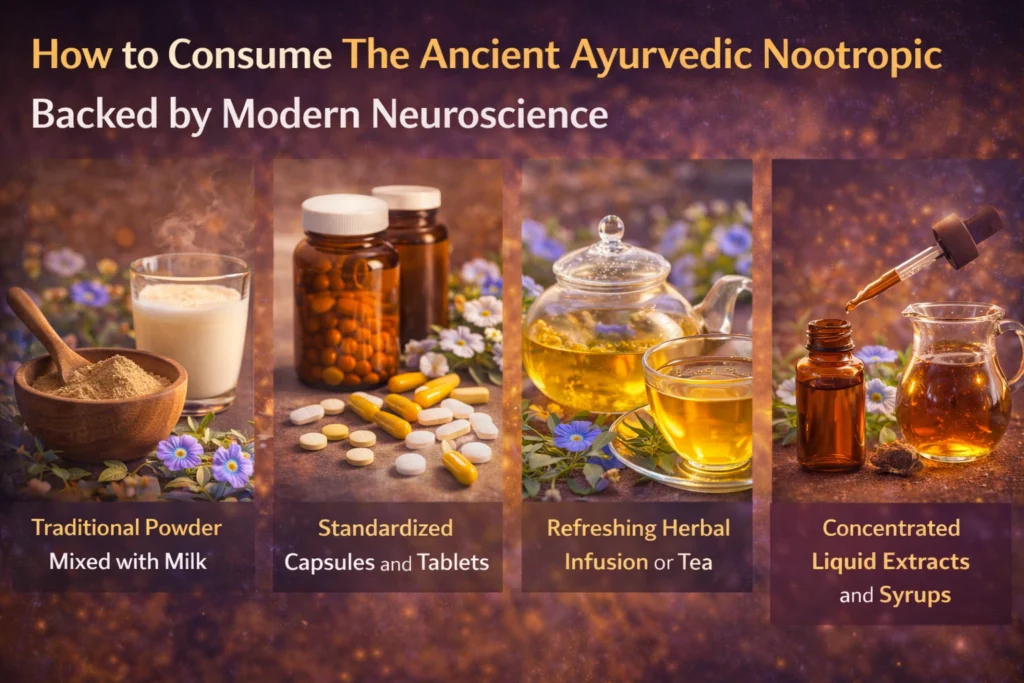
Traditional Powder Mixed with Milk
Using the powdered form of the plant is one of the most traditional and effective ways to experience its benefits. You can mix half a teaspoon of the powder into a cup of warm organic milk, which serves as a traditional anupana or carrier to help the herb penetrate deeper into the body’s tissues. This method is often recommended to be taken in the morning on an empty stomach to prime the brain for the day ahead.
Standardized Capsules and Tablets
For those who are always on the go, capsules provide a convenient and tasteless way to ensure you never miss your daily dose. Capsules usually contain a standardized extract, which means you are getting a consistent amount of the active phytochemicals in every serving. This is a great option for people who want the benefits of the ancient Ayurvedic nootropic backed by modern neuroscience without the preparation time of traditional methods.
Refreshing Herbal Infusion or Tea
If you enjoy the ritual of a warm beverage, you can steep the dried whole plant in hot water for about five to ten minutes to create a soothing tea. This infusion is particularly pleasant when consumed in the late afternoon or evening to help transition your mind from the stress of work into a state of relaxation. You can add a bit of raw honey or a slice of ginger to enhance the flavor and digestive absorption.
Concentrated Liquid Extracts and Syrups
Syrups are very common in traditional Ayurvedic medicine, especially when formulated for children or the elderly. These preparations often blend the herb with other brain-supporting plants like Brahmi or Gotu Kola in a base of honey or unrefined sugar. Liquid extracts are also available for those who want a potent dose that can be easily added to a small amount of water or juice for quick absorption.
Recommended Dosage
The general recommended dosage for this herb depends largely on the format you choose and your specific health goals. For the raw powder, most adults benefit from taking 3 to 6 grams per day, typically split into two doses. If you prefer capsules, a common dose is 250mg to 500mg of a standardized extract twice daily. For liquid syrups, the standard dose is usually one to two tablespoons per day. It is always best to start with the lowest recommended dose and monitor how your body and mind feel before slowly increasing the amount.
Safety and Side Effects
Dwarf Morning Glory is generally considered to be very safe and well-tolerated when used within the recommended dosage ranges. Because it has a naturally cooling and calming effect, some people might experience a slight feeling of heaviness or very mild lethargy if they take too much at once. There are no known major toxicities associated with the herb, but as with any supplement, it is important to pay attention to your body’s unique signals.
FAQ
Can I take this herb if I am already taking coffee?
While you can take both, many people find that this herb helps to smooth out the “jitters” often associated with caffeine. However, since it is a calming tonic, taking it at the same time as a high dose of caffeine might slightly dampen the stimulant effect. Many find it better to take their coffee in the morning and this herb in the afternoon to help with the post-caffeine crash.
Is it safe for children to use for school?
Historically, this herb has been given to children in India to help with concentration and memory. However, children require much smaller doses than adults, and it should always be administered under the guidance of a professional. It is usually given to children in the form of a pleasant-tasting syrup to make it easier for them to take.
How soon will I feel the effects on my focus?
Some people notice a subtle sense of calm and clarity within the first few days of use. However, for the more significant cognitive benefits like improved memory and learning, it usually takes consistent use for about four to six weeks. Think of it as an investment in your brain’s long-term health rather than a quick fix.
Does it have a strong taste?
The raw powder has a slightly bitter, earthy, and astringent taste that is characteristic of many Ayurvedic herbs. This is why it is traditionally mixed with milk and honey, which helps mask the bitterness. If you are sensitive to tastes, capsules or flavored syrups are definitely the best route for you.
Can I take it before a big exam or presentation?
Yes, many people find it helpful to take a dose about an hour before a high-pressure event. Because it helps reduce performance anxiety while keeping the mind sharp, it can help you stay present and articulate. It is best to have tried the herb a few times before the big day so you know exactly how it affects you.
Conclusion
Whether you are looking to protect your memory as you age, reduce the weight of daily stress, or simply find that missing spark of focus, Shankhpushpi offers a gentle and effective solution. As you begin to integrate this ancient wisdom into your modern life, you may find that the “tabs” in your brain start to close more easily, leaving you with a sense of clarity and peace. Please remember to consult with a healthcare professional before beginning any new herbal regimen to ensure it is the right fit for your unique body and mind.
Recent Post: 8 Science-Backed Ways Bacopa Monnieri Reduces Stress & Anxiety for a Calmer Mind




One thought on “Dwarf Morning Glory: The Ancient Ayurvedic Nootropic Backed by Modern Neuroscience”