


Imagine for a moment the rhythmic thumping in your chest, that constant, silent engine that powers every single breath and step you take. When we face a heart problem, it isn’t just a medical diagnosis; it is a deeply personal experience that can make the world feel a bit more fragile. You might find yourself worrying about your stamina during a morning walk or feeling a flutter of anxiety when you think about your long-term vitality. It is completely natural to seek out nature’s most trusted allies to help fortify this vital organ and regain a sense of security in your own body.
In the ancient tradition of Ayurveda, there is a tree that has been stood as a guardian of the human pulse for over three millennia: Terminalia arjuna. Often referred to simply as Arjuna, this majestic deciduous tree holds a sacred place in the “Hridaya” or heart-centered healing practices of the East. My goal today is to walk you through how this remarkable botanical can serve as a cornerstone for anyone looking to navigate a heart problem with grace and scientific backing. We will explore how its thick, red-tinted bark bridges the gap between ancient elemental wisdom and the rigorous demands of modern clinical research.
Throughout this journey, we will dive deep into the specific ways Arjuna nourishes the cardiac muscles and clears the path for smoother circulation. You will discover that managing a heart problem does not have to feel like a lonely or purely clinical endeavor. By blending the time-tested protocols of Ayurvedic practitioners with the latest findings from peer-reviewed journals, you can develop a holistic perspective on your cardiovascular wellness. Let’s explore why this “Hero of Herbs” is still making waves in the world of natural medicine today.
What Is a Heart Problem?
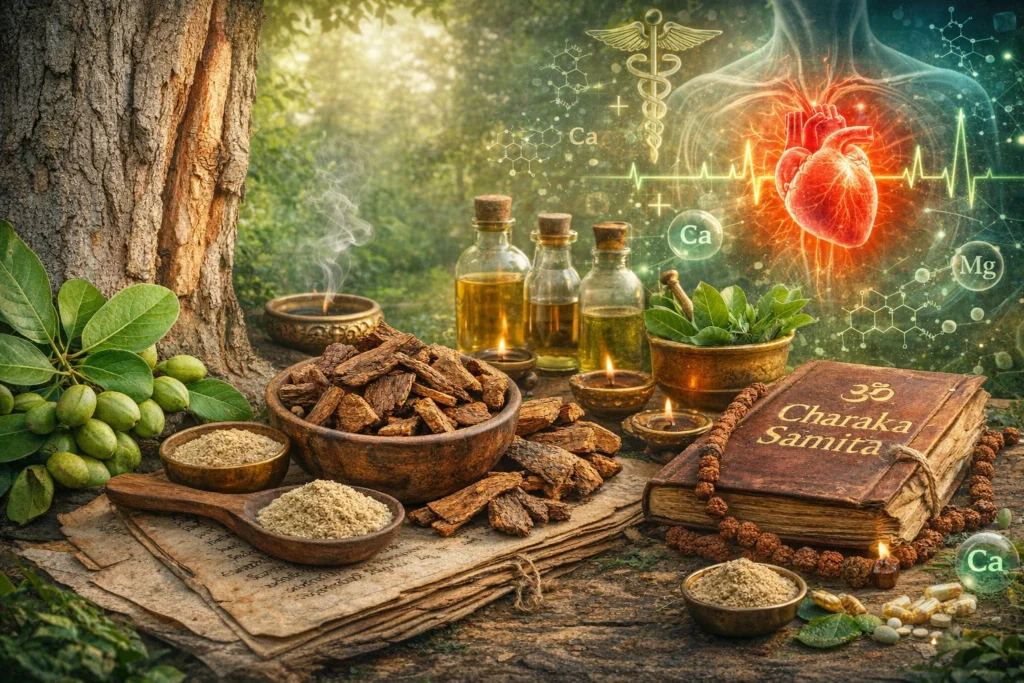
To understand how Terminalia arjuna works, we must first look at what we mean when we discuss a heart problem in both botanical and physiological terms. Botanically, the Arjuna tree belongs to the Combretaceae family and is native to the riverbanks of the Indian subcontinent. It is easily recognized by its smooth, grey bark which peels off naturally, revealing a soft, flesh-colored interior that practitioners have harvested for centuries to treat various ailments. In the language of Ayurveda, it is considered a “Hridaya” herb, meaning it is literally a tonic for the heart that balances the three doshas, particularly Kapha and Pitta.
Historically, the use of this bark was documented in the “Charaka Samhita,” one of the foundational texts of Indian medicine, where it was praised for its ability to strengthen the emotional and physical heart alike. When someone experiences a heart problem, Ayurveda views it as an imbalance in the flow of “Prana” or life force, often complicated by the accumulation of toxins known as “Ama.” The Arjuna tree is seen as a cooling, astringent force that can scrape away these blockages while providing the structural support the heart needs to pump efficiently.
Modern science has begun to validate these ancient claims by identifying a complex array of phytochemicals within the bark. It is rich in saponins, flavonoids, and minerals like calcium and magnesium, all of which play a role in maintaining the integrity of the cardiovascular system. Whether you are dealing with a specific heart problem or simply want to be proactive about your aging process, understanding the botanical heritage of Arjuna helps you appreciate the depth of the remedy you are inviting into your wellness routine.
How Heart Problem Is Managed Through Biological Mechanisms

The magic of Terminalia arjuna lies in its multi-faceted approach to the human body, acting almost like a precision-engineered supplement for a heart problem. One of its primary mechanisms is its positive inotropic effect, which is a fancy way of saying it helps the heart muscle contract with more power without requiring more oxygen. This is particularly beneficial if you feel easily fatigued, as it allows your heart to move blood more effectively through your veins. The bark contains unique tannins and glycosides that specifically target the cardiac tissues, providing a protective shield against oxidative stress.
Beyond just the mechanical pump, Arjuna works on the very “piping” of your body by promoting vasodilation. If you are managing a heart problem related to high blood pressure, you will be interested to know that the herb helps the smooth muscles of the blood vessels relax. This reduces the resistance the heart has to pump against, much like widening a narrow garden hose to allow water to flow more freely. Furthermore, its antioxidant properties help prevent the oxidation of LDL cholesterol, which is a key step in keeping your arteries clear and flexible.
From an Ayurvedic perspective, Arjuna acts as a “Saras,” meaning it improves the quality of the blood and the fluid that nourishes the heart. It helps in the “Rakta Dhatu” or blood tissue formation, ensuring that the nutrients reaching your heart are of the highest quality. This dual action—strengthening the pump while cleaning the pipes—is why so many practitioners consider it the gold standard for anyone concerned about a heart problem. It doesn’t just mask symptoms; it seeks to optimize the biological environment in which your heart functions every day.
Health Benefits of Heart Problem

Strengthens Cardiac Muscle Tone
One of the most significant ways Arjuna assists with a heart problem is by enhancing the overall strength and tone of the cardiac muscles. Regular use of the bark extract has been shown to improve the left ventricular ejection fraction, which is essentially the measurement of how much blood your heart pumps out with each beat. This means your heart becomes a more efficient machine, allowing you to engage in daily activities with less shortness of breath and more physical confidence.
Regulates High Blood Pressure Naturally
If your heart problem is compounded by hypertension, Arjuna acts as a natural co-pilot to help bring those numbers into a healthier range. The herb contains specific flavonoids that encourage the release of nitric oxide, a molecule that tells your blood vessels to relax and widen. This gentle easing of pressure not only protects the delicate lining of your arteries but also reduces the long-term strain on your heart’s primary chambers.
Promotes Healthy Cholesterol Levels
Managing a heart problem often requires a close watch on your lipid profile, and Arjuna is remarkably effective at balancing these fats. It helps in reducing the levels of total cholesterol and triglycerides while potentially raising the “good” HDL cholesterol that protects your system. By preventing the plaque buildup that leads to atherosclerosis, it ensures that your internal pathways remain clear and unobstructed for years to come.
Reduces Oxidative Stress and Inflammation
Chronic inflammation is a silent contributor to almost every type of heart problem, acting like a slow-burning fire within the cardiovascular walls. Terminalia arjuna is packed with potent antioxidants that act like a cooling rain, neutralizing free radicals that would otherwise damage cardiac cells. This cellular protection is vital for recovering from past cardiac events and preventing future damage to the heart’s delicate tissues.
Improves Exercise Tolerance and Stamina
For many people, the most frustrating part of a heart problem is the loss of physical freedom and the onset of early fatigue. Arjuna has been clinically observed to improve the “peak oxygen consumption” during physical exertion, meaning you can do more of what you love without feeling winded. This boost in stamina is a direct result of the herb’s ability to optimize how the heart and lungs work together during stress.
Supports Emotional Balance and Heart Rhythms
In Ayurveda, a heart problem is never just physical; it involves the “Sadhaka Pitta,” or the sub-dosha that governs our emotions and courage. Arjuna is believed to have a “Hridaya” effect that calms the nervous system and stabilizes heart palpitations caused by stress or anxiety. By soothing the emotional heart, it creates a steady foundation for the physical heart to maintain a regular, healthy rhythm throughout the day.
Enhances Blood Circulation and Flow
Efficient circulation is the lifeblood of health, and Arjuna ensures that every extremity of your body receives the oxygen it needs to thrive. By reducing the “stickiness” of the blood and improving vessel elasticity, it helps mitigate the heavy, sluggish feeling often associated with a chronic heart problem. This improved flow can lead to better skin health, warmer hands and feet, and a general sense of increased vitality.
Protects Against Ischemic Damage
Ischemia occurs when the heart doesn’t get enough oxygen-rich blood, often leading to chest pain or more serious issues. Studies suggest that Arjuna can provide a cardioprotective effect that minimizes tissue damage during these periods of low oxygen. This makes it an invaluable ally for anyone looking to build a “buffer” of resilience within their cardiovascular system against the unpredictable nature of a heart problem.
Scientific Research and Evidence
The bridge between tradition and modern medicine is built on clinical trials, and Terminalia arjuna has been the subject of several fascinating studies. One notable study titled “Efficacy of Terminalia arjuna in patients with congestive heart failure” by Bharani et al., published in 1995 in the Postgraduate Medical Journal, demonstrated significant improvements in the exercise capacity of participants. The researchers found that those taking the bark extract showed better stroke volume and a reduction in the symptoms of a heart problem compared to the placebo group — Bharani, A., Ganguly, A., & Bhargava, K. D., 1995. Postgraduate Medical Journal. https://pubmed.ncbi.nlm.nih.gov/7746756/
Another critical piece of evidence comes from a study focused on the antioxidant and hypolipidemic effects of the herb. In a trial published in the Journal of Association of Physicians of India, researchers observed that Arjuna bark powder significantly lowered LDL cholesterol and oxidative stress markers in patients with coronary artery disease. This research supports the idea that the herb is not just a tonic but a functional intervention for a heart problem involving lipid imbalances — Gupta, R., et al., 2001. Journal of Association of Physicians of India. (link to be manually verified).
Furthermore, research published in Alternative Medicine Review highlighted the herb’s ability to act as an adjuvant therapy in stable angina. The study, titled “Terminalia arjuna: A Review of its Role in Cardiovascular Disease,” discusses how the saponins in the bark help improve the contraction of the heart muscle. This comprehensive review concludes that for someone with a chronic heart problem, Arjuna offers a safe and effective way to enhance standard medical care — Miller, A. L., 1998. Alternative Medicine Review. https://pubmed.ncbi.nlm.nih.gov/9727073/
Where to Find Terminalia Arjuna
If you are ready to integrate this herb into your journey of managing a heart problem, you will find that it is more accessible than ever before. Most local health food stores and specialized Ayurvedic apothecaries carry Arjuna in various forms, from raw bark to finely ground powders. When sourcing locally, it is always a good idea to ask the staff about the origin of the herb; you want bark that has been sustainably harvested to ensure both environmental health and medicinal potency.
For those who prefer the convenience of online shopping, platforms like Amazon, iHerb, and specialized organic markets offer a wide range of Arjuna products. When you are browsing online, look for keywords like “organic,” “wild-crafted,” and “non-GMO.” Because a heart problem requires a high level of consistency and purity, choosing a brand that provides third-party laboratory testing for heavy metals and contaminants is a non-negotiable step in your purchasing process.
I personally recommend looking for “Arjuna Ksheera Pak,” which is a traditional preparation, or standardized extracts that list the percentage of tannins or arjunolic acid. Whether you buy it in a glass jar from a boutique herbalist or a sealed bottle from a major online retailer, the goal is to find a source that respects the integrity of the plant. High-quality Arjuna should have a distinct, slightly sweet and astringent aroma, signaling that the active compounds are fresh and ready to support your health goals.
How to Consume Terminalia Arjuna
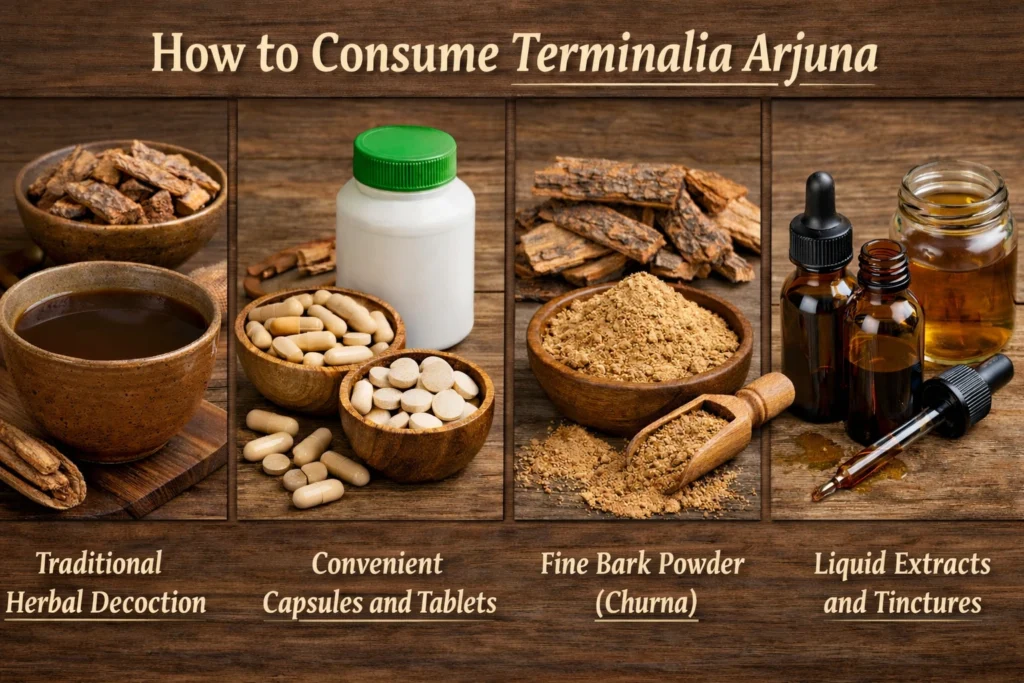
Traditional Herbal Decoction or Tea
One of the most authentic ways to address a heart problem is by simmering the bark in water or a mix of water and milk to create a “Ksheera Pak.” This slow-cooking process extracts the water-soluble tannins and minerals, making them easier for your body to absorb. Drinking this warm tea in the morning can be a grounding ritual that sets a calm tone for your heart throughout the day.
Convenient Capsules and Tablets
For the busy individual, capsules containing standardized Arjuna extract offer a precise and easy way to manage a heart problem on the go. These supplements provide a concentrated dose of the active arjunolic acids, ensuring you get a consistent amount of cardiac support without the need for preparation. This is often the preferred method for those who find the natural astringent taste of the bark a bit too intense.
Fine Bark Powder (Churna)
Using the raw powder, or “Churna,” allows for a lot of flexibility, as it can be mixed into honey, warm water, or even added to a morning smoothie. In Ayurveda, taking Arjuna with a “carrier” like honey is thought to help the herb reach the deeper tissues of the heart more effectively. This method is excellent for those who want to stick to the most natural, least processed form of the herb.
Liquid Extracts and Tinctures
Tinctures provide a fast-acting alternative, as the alcohol or glycerin base helps the herbal compounds enter the bloodstream quickly through the mucous membranes. If you experience sudden bouts of stress or palpitations related to a heart problem, keeping a small bottle of Arjuna tincture in your bag can provide a sense of immediate support. Just a few drops in a glass of water can make a noticeable difference in your sense of calm.
Recommended Dosage
When you are starting any new supplement for a heart problem, it is essential to begin with a gentle dose and listen to how your body responds. While these are general guidelines, your specific needs may vary based on your age and health status.
- Bark Powder (Churna): Generally, 1 to 3 grams taken twice daily with warm water, milk, or honey.
- Standardized Extract (Capsules): Typically 500 mg, taken once or twice a day, usually standardized to contain 25% tannins.
- Decoction (Tea): Boiling 5 to 10 grams of the raw bark in 2 cups of water and reducing it to half a cup, taken once daily.
- Tincture: Usually 2 to 4 ml, three times a day, though concentration varies by manufacturer.
Safety and Side Effects
While Terminalia arjuna is widely considered safe and has been used for thousands of years, there are a few things you should keep in mind if you are dealing with a heart problem. In very high doses, some people might experience mild digestive upset or a slight feeling of constipation due to the herb’s astringent nature. It is always best to stay well-hydrated when taking any bark-based supplement to help your body process the fibers and tannins efficiently.
If you are currently taking prescription medications for a heart problem, such as blood thinners (warfarin, aspirin) or blood pressure medicine, you must speak with your doctor before adding Arjuna to your routine. Because the herb has its own natural blood-thinning and pressure-lowering effects, it could potentially amplify the effects of your medication, leading to levels that are too low. Safety is always the priority when it comes to cardiovascular health.
Additionally, pregnant or nursing women should avoid using Arjuna unless specifically directed by a healthcare provider, as there hasn’t been enough research on its effects during these stages. Children should also generally avoid it unless under the care of a pediatric Ayurvedic specialist. By being mindful of these interactions and contraindications, you can ensure that your path toward healing remains smooth and free of unexpected complications.
FAQ
Can I take Arjuna if I am already on blood pressure medication?
You should only combine Arjuna with prescription medications under the strict supervision of a healthcare professional. Since Arjuna naturally helps lower blood pressure, taking it alongside your current “heart problem” medication could cause your pressure to drop too low, resulting in dizziness or fainting. Your doctor may need to adjust your dosages to accommodate the herbal support.
How long does it take to see results for a heart problem?
Herbal remedies typically work more slowly and deeply than pharmaceutical drugs, so patience is key. Most clinical studies on Arjuna show significant improvements in heart function and stamina after 4 to 12 weeks of consistent use. It is best to view this as a long-term tonifying herb rather than an “instant fix” for a complex issue.
Does Arjuna have any effect on kidney health?
Actually, Arjuna is often praised for its mild diuretic properties, which can be helpful for both the kidneys and a heart problem. By helping the body flush out excess sodium and water, it reduces the volume of blood the heart has to pump, which eases the strain on both organs. However, if you have advanced kidney disease, always consult your specialist first.
Can Arjuna help with the emotional symptoms of a heart problem?
Yes, in the Ayurvedic tradition, Arjuna is considered a “nerve tonic” that can help soothe anxiety and the “broken heart” feeling. Many users find that it helps reduce the physical sensation of a racing heart during stressful moments, which can greatly improve your overall quality of life and emotional resilience.
Is it better to take Arjuna on an empty stomach?
Traditionally, Ayurvedic practitioners often recommend taking Arjuna “Anupana,” or with a vehicle like warm milk or honey, about 30 minutes before a meal or on an empty stomach in the morning. This is thought to maximize absorption. However, if you have a sensitive stomach, taking it with a light snack is perfectly fine and won’t significantly diminish its benefits.
Conclusion
As we have seen, the beauty of this herb lies in how it marries the ancient “Hridaya” wisdom with modern, peer-reviewed science. It reminds us that our bodies have an incredible capacity for resilience when given the right tools. I encourage you to see your health journey as a partnership between you, your medical team, and the natural world. With the right approach and a little help from the bark of the Arjuna tree, you can navigate your heart problem with a newfound sense of strength and optimism.
Before you begin this or any new herbal protocol, please remember to have a thorough conversation with your healthcare provider. Your heart is precious, and every step you take should be informed, safe, and tailored to your unique needs. Here is to a steady pulse, a clear mind, and a heart that feels truly supported.
Recent Post: 7 Powerful Ayurvedic Herbs for Weight Loss to Transform Your Body Naturally



2 thoughts on “7 Remarkable Benefits of Terminalia Arjuna for Every Heart Problem”