

Introduction:
Lavender and Sleep Quality are closely connected, as lavender is one of the most well-known aromatic herbs used worldwide for relaxation and improving sleep quality. Its gentle floral fragrance has been used for centuries to calm the mind, reduce stress, and promote deep, restorative sleep.
In Ayurveda, lavender is valued for its ability to balance the mind and nervous system. It is especially beneficial for individuals dealing with stress, anxiety, and insomnia—common causes of poor sleep.
In this article, you will learn how lavender works in the body, its scientifically proven benefits for sleep, how to use it effectively, and the safest ways to include it in your daily routine.
What Is Lavender and Sleep Quality?:
Lavender and Sleep Quality: A Natural Ayurvedic & Science-Backed Guide to Deep, Restful Sleep begins with understanding lavender itself. Lavender, scientifically known as Lavandula angustifolia, is a flowering plant native to the Mediterranean region. It produces beautiful purple flowers and a calming essential oil widely used in herbal medicine and aromatherapy.
Historically, lavender has been used by ancient Romans and Greeks for bathing, relaxation, and sleep enhancement. In Ayurveda, lavender is considered a cooling herb that helps balance Vata and Pitta doshas, which are often linked to restlessness, anxiety, and sleep disturbances.
How This Herb Works in the Body:
Lavender and Sleep Quality: A Natural Ayurvedic & Science-Backed Guide to Deep, Restful Sleep explains how lavender works through both Ayurvedic and modern biological mechanisms. From an Ayurvedic perspective, it calms the mind (Manas), reduces excess Vata (movement and anxiety), and promotes mental clarity and relaxation.
Scientifically, lavender contains active compounds such as linalool and linalyl acetate. These compounds interact with the brain’s GABA receptors, which are responsible for reducing nervous system activity. This leads to a calming effect, reduced stress levels, and easier sleep onset.
Lavender also helps lower cortisol (the stress hormone) and activates the parasympathetic nervous system, allowing the body to enter a relaxed, sleep-ready state.
Health Benefits of Lavender and Sleep Quality:
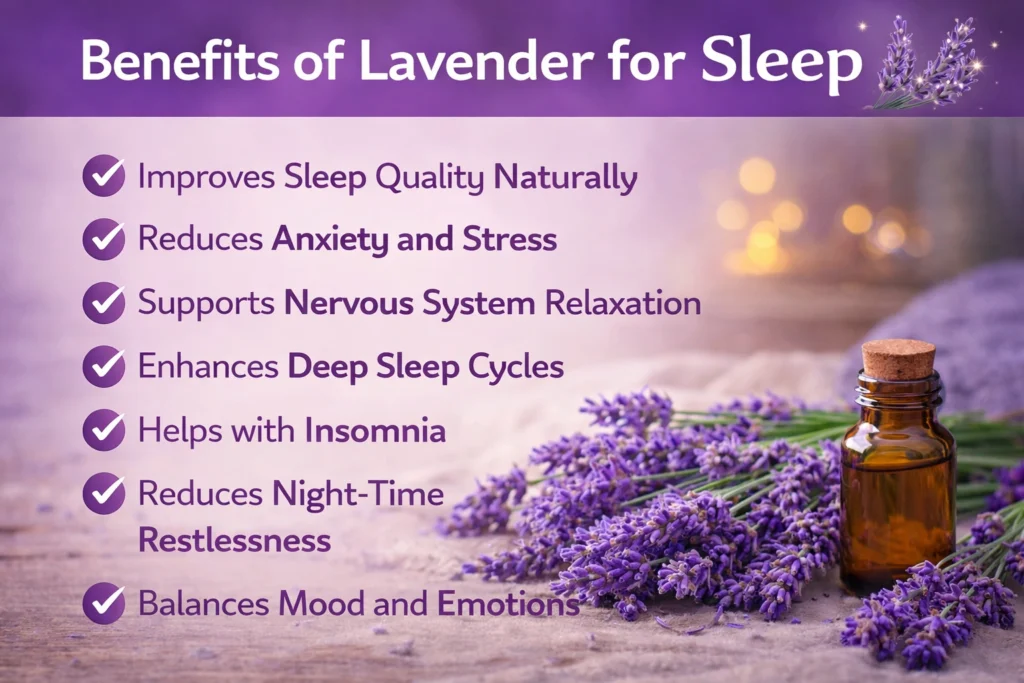
Improves Sleep Quality Naturally
Lavender helps increase sleep duration and depth, making it especially effective for people with insomnia or poor sleep patterns.
Reduces Anxiety and Stress
Its natural calming aroma lowers anxiety levels, which is one of the main causes of sleep disturbances.
Supports Nervous System Relaxation
Lavender relaxes the nervous system, helping reduce heart rate and blood pressure for better sleep conditions.
Enhances Deep Sleep Cycles
It supports deeper sleep stages (REM sleep), which are essential for mental recovery and overall well-being.
Helps with Insomnia
Lavender tea and essential oil are widely used as natural remedies for insomnia without the side effects of medications.
Reduces Night-Time Restlessness
It helps calm physical and mental restlessness, allowing the body to stay relaxed throughout the night.
Balances Mood and Emotions
Lavender acts as a mild mood stabilizer, reducing irritability and promoting emotional balance.
Scientific Research and Evidence:

Lavender aromatherapy has been shown to significantly improve sleep quality and reduce anxiety in adults. National Institutes of Health
Inhalation of lavender essential oil improves sleep patterns and increases sleep efficiency in individuals with insomnia. PubMed
A clinical study found that lavender capsules improved sleep disturbances and reduced anxiety symptoms. NCBI
Lavender aroma has been observed to reduce heart rate and promote relaxation before sleep. WHO
Where to Find Lavender:
Lavender is widely available in herbal stores, Ayurvedic shops, and organic health markets. You can find it in various forms such as dried flowers, essential oil, powder, and capsules.
Online platforms like Amazon and iHerb also offer high-quality lavender products. Always choose organic, chemical-free, and pure-grade products. Look for certifications such as USDA Organic or GMP-certified supplements for better quality assurance.
How to Consume Lavender:
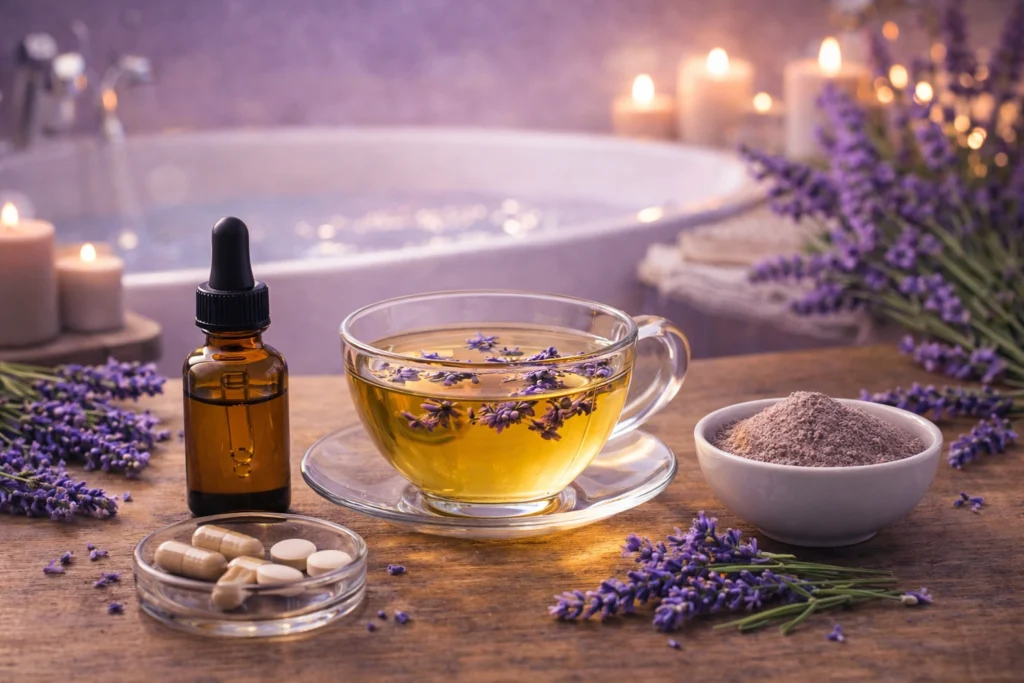
Lavender Tea (Herbal Infusion)
Steep 1–2 teaspoons of dried lavender flowers in hot water for 5–10 minutes. Drink before bedtime for best results.
Lavender Essential Oil (Aromatherapy)
Add 2–3 drops to a diffuser or apply to a pillow to inhale the calming aroma before sleep.
Capsules or Tablets
Standardized lavender extract capsules are convenient for consistent dosage and therapeutic benefits.
Herbal Powder (Churna)
Lavender powder can be mixed with warm water or honey and consumed in small quantities.
Relaxing Lavender Bath
Add a few drops of lavender oil to warm bath water to relax muscles and calm the mind before sleep.
Recommended Dosage:
For tea, 1–2 teaspoons of dried lavender flowers per cup is sufficient. Essential oil should be used in 2–3 drops per session. Capsules typically range between 80–160 mg per day.
Dosage may vary depending on age, health condition, and individual sensitivity. It is always advisable to consult a healthcare professional for personalized guidance.
Safety and Side Effects:
Lavender is generally safe when used in moderate amounts. However, excessive use may cause mild side effects such as headache, nausea, or skin irritation.
Pregnant or breastfeeding women, young children, and individuals with hormone-sensitive conditions should consult a doctor before use.
Lavender may interact with sedatives, antidepressants, and anti-anxiety medications, so caution is advised.
FAQ
Is lavender safe for daily use?
Yes, when used in moderate amounts, lavender is safe for daily use.
When should I take lavender for sleep?
The best time is 20–30 minutes before bedtime.
Does lavender help with anxiety?
Yes, lavender is known for its natural anti-anxiety and calming effects.
Can lavender oil be applied directly to the skin?
No, it should be diluted with a carrier oil before applying.
How long does lavender take to improve sleep?
Most people notice improvements within 5–7 days of regular use.
Conclusion:
Lavender is a powerful natural remedy that supports better sleep quality through both Ayurvedic wisdom and modern scientific validation. Its calming properties help reduce stress, relax the nervous system, and promote deep, restorative sleep.
Whether used as tea, essential oil, or supplement, lavender offers a gentle and effective solution for improving sleep naturally.
However, it is always best to consult a qualified healthcare provider before starting any herbal remedy, especially if you have underlying health conditions or are taking medications.
Disclaimer:
The information provided in this article is for educational and informational purposes only. It is not intended to be a substitute for professional medical advice, diagnosis, or treatment. Always consult a qualified healthcare provider or licensed Ayurvedic practitioner before starting any herbal supplement, especially if you are pregnant, nursing, taking medications, or have an existing health condition.
Recent Post: Peppermint for Digestive Comfort: A Proven Natural Remedy for Gas, Bloating & IBS Relief




Can it be taken in capsule form?