


Introduction:
Peppermint for digestive comfort is one of the most trusted natural remedies for common stomach issues like gas, bloating, and indigestion. If you often feel heaviness or discomfort after meals, this simple herb can make a noticeable difference in how your digestion feels every day.
In today’s fast-paced lifestyle, digestive problems have become extremely common due to poor eating habits, stress, and irregular routines. This is where peppermint stands out as a gentle yet powerful solution that has been used for centuries in both Ayurveda and traditional medicine.
In this article, you’ll discover how peppermint works in the body, its science-backed digestive benefits, and the best ways to use it for long-term gut comfort and relief.
What Is Peppermint for Digestive Comfort?
Peppermint (Mentha piperita) is a natural hybrid of watermint and spearmint. It is widely known for its cooling sensation and refreshing aroma.
Historically, peppermint has been used in traditional systems of medicine for digestive support, especially after meals.
In Ayurveda, pudina is considered a powerful herb that stimulates digestion (Deepana) and helps process food efficiently (Pachana). It is especially beneficial for balancing gas and calming the digestive system.
How This Herb Works in the Body:
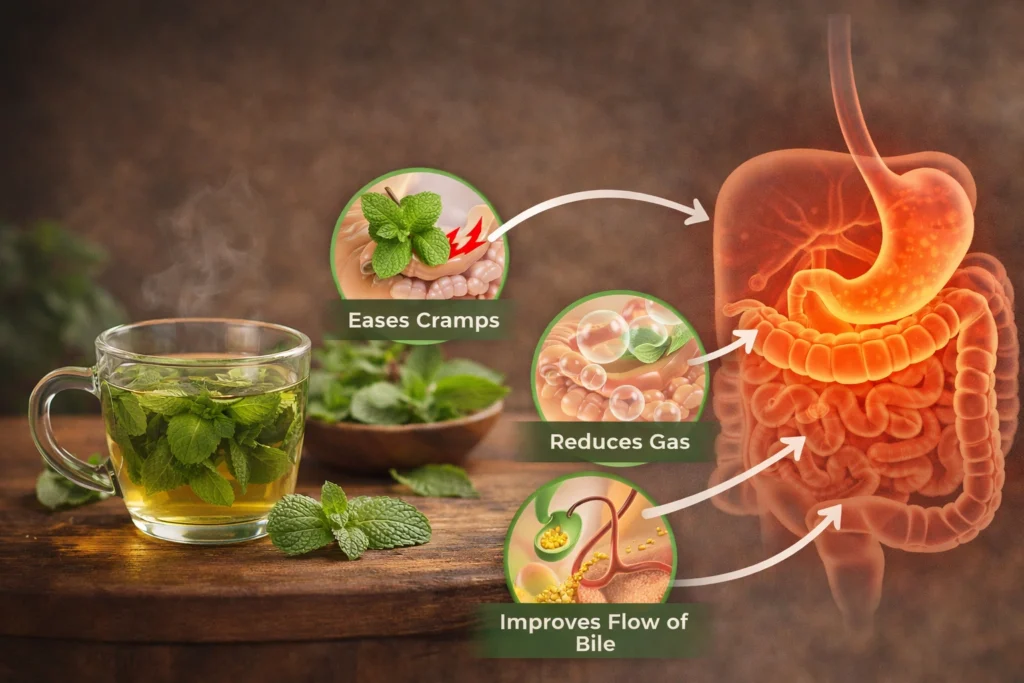
Here’s where peppermint becomes truly powerful.
Peppermint contains menthol, a natural compound that relaxes the muscles of your digestive tract. This helps reduce spasms, allowing gas to pass easily and relieving bloating.
From a scientific perspective, this “muscle relaxation effect” is what makes peppermint especially useful for conditions like IBS.
From an Ayurvedic angle, peppermint helps balance Vata (which controls movement and gas) and supports healthy digestion by improving Agni (digestive fire).
Health Benefits of Peppermint for Digestive Comfort:
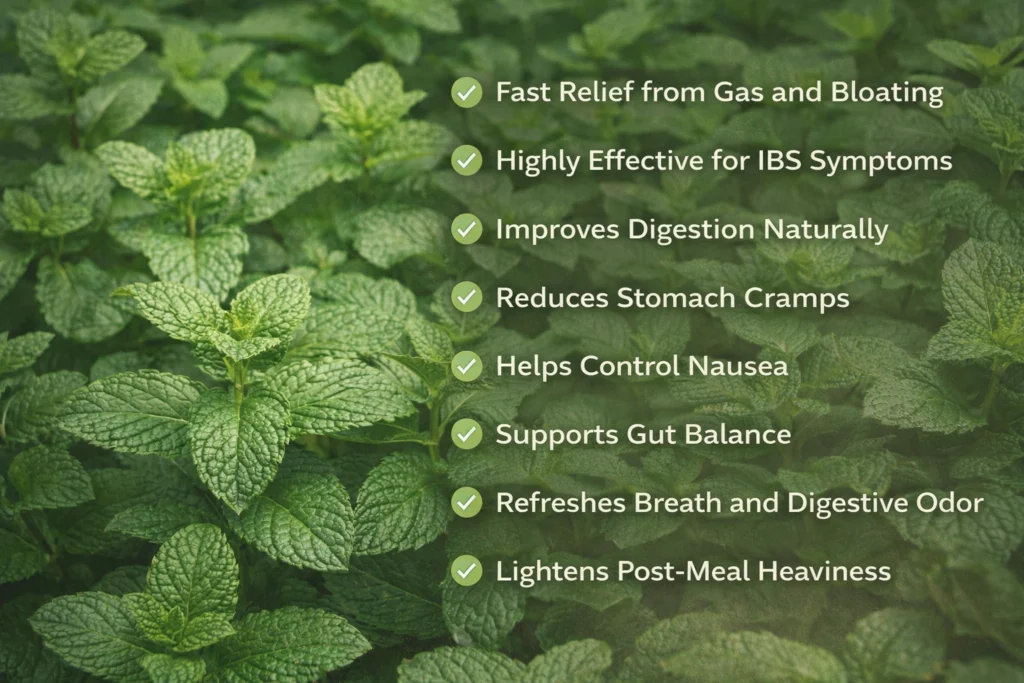
1. Fast Relief from Gas and Bloating
Peppermint helps release trapped gas, making your stomach feel lighter and more comfortable.
2. Highly Effective for IBS Symptoms
Peppermint oil is one of the most studied natural remedies for IBS, helping reduce pain, cramps, and irregular bowel movements.
3. Improves Digestion Naturally
It stimulates bile flow, which helps break down fats and improves overall digestion.
4. Reduces Stomach Cramps
Its antispasmodic effect relaxes intestinal muscles, reducing pain and discomfort.
5. Helps Control Nausea
Peppermint’s cooling effect can quickly calm nausea and queasiness.
6. Supports Gut Balance
It has mild antimicrobial properties that may help maintain healthy gut bacteria.
7. Refreshes Breath and Digestive Odor
Peppermint helps eliminate bad breath linked to poor digestion.
8. Lightens Post-Meal Heaviness
It prevents that sluggish, heavy feeling after eating oily or heavy food.
Scientific Research and Evidence:

Peppermint oil significantly improves IBS symptoms including abdominal pain and bloating. The impact of peppermint oil on the irritable bowel syndrome
Menthol relaxes intestinal smooth muscles, reducing digestive spasms. Effects of menthol on circular smooth muscle of human colon
Peppermint supports bile secretion, improving fat digestion. Effects of peppermint essential oil and artifier on growth performance
Peppermint shows antimicrobial activity that supports gut health. The physiologic effects and safety of Peppermint Oil and its efficacy in irritable bowel syndrome and other functional disorders
Where to Find Peppermint for Digestive Comfort:
You can easily find peppermint in fresh, dried, or supplement form at local herbal stores, Ayurvedic shops, and online marketplaces like Amazon or iHerb.
Always choose organic products and trusted brands. For best results, look for standardized peppermint oil capsules or fresh, high-quality leaves.
How to Consume Peppermint for Digestive Comfort:
Peppermint Tea:
The easiest and most effective method—drink after meals.
Capsules (Peppermint Oil):
Best for IBS and chronic digestive issues.
Herbal Powder:
Can be mixed with water or honey.
Kadha (Decoction):
Stronger herbal preparation for deeper digestive issues.
Fresh Leaves:
Chew after meals for quick relief.
Peppermint Oil Massage:
Diluted oil can be applied to the stomach for cramps.
Recommended Dosage:
Peppermint tea: 1–2 cups daily
Peppermint oil capsules: 180–225 mg, 2–3 times daily
Powder: 1–2 grams daily
Fresh leaves: 5–10 leaves after meals
Safety and Side Effects:
Peppermint is generally safe, but in some people it may cause heartburn or worsen acid reflux.
Avoid excessive use if you have GERD. Pregnant women and those on medications should consult a doctor before use.
FAQ
Can peppermint be taken daily?
Yes, in moderate amounts it is safe and beneficial.
Is peppermint good for gas?
Yes, it helps release trapped gas and reduce bloating.
Does peppermint cure IBS?
It helps manage symptoms but is not a complete cure.
When should I take peppermint?
After meals for best digestive support.
Can peppermint cause acidity?
In some people, yes—especially if taken in excess.
Conclusion:
Peppermint for digestive comfort is one of the most effective and easy-to-use natural remedies available today. It not only relieves gas and bloating but also supports long-term digestive health.
With strong backing from both Ayurveda and modern research, peppermint is a reliable addition to your daily routine.
However, for chronic digestive conditions, it’s always best to consult a healthcare professional before regular use.
Image SEO Guide:
Fresh peppermint leaves — alt: fresh peppermint leaves for digestion — intro
Peppermint tea — alt: peppermint tea for digestive comfort — consumption
Peppermint powder — alt: peppermint powder for digestion — consumption
Infographic — alt: peppermint benefits for digestion — benefits
Digestive diagram — alt: peppermint effect on gut — intro
Capsules — alt: peppermint oil capsules IBS — consumption
Dosage chart — alt: peppermint dosage guide — dosage
Internal Linking Suggestions:
Best herbs for digestion
Natural remedies for bloating
Ginger for gut health
Ayurvedic digestion tips
Herbal teas for stomach
DISCLAIMER:
“The information provided in this article is for educational and informational purposes only. It is not intended to be a substitute for professional medical advice, diagnosis, or treatment. Always consult a qualified healthcare provider or licensed Ayurvedic practitioner before starting any herbal supplement, especially if you are pregnant, nursing, taking medications, or have an existing health condition.”
Recent Post: How to Boost Immune System Naturally: Ayurvedic Herbs, Diet & Science-Backed Tips




One thought on “Peppermint for Digestive Comfort: A Proven Natural Remedy for Gas, Bloating & IBS Relief”